

Why protecting a river means investing in clean water, hydraulic safety and sustainable local development


The scientific and managerial analysis of a river ecosystem requires a vision that transcends simple hydraulic observation, embracing a biological, geomorphological and socio-economic complexity. A river is an open and dynamic system, responsible for transporting energy, inorganic sediments, nutrients and organic matter from mountain peaks to alluvial plains and, finally, to the oceans. The vitality of this system depends on its ability to maintain fluid connectivity across interconnected spatial and temporal dimensions, guaranteeing fundamental ecosystem services for human survival, from the recharge of underground aquifers to the mitigation of extreme climate events.
Definition and multidimensional structure of the river ecosystem
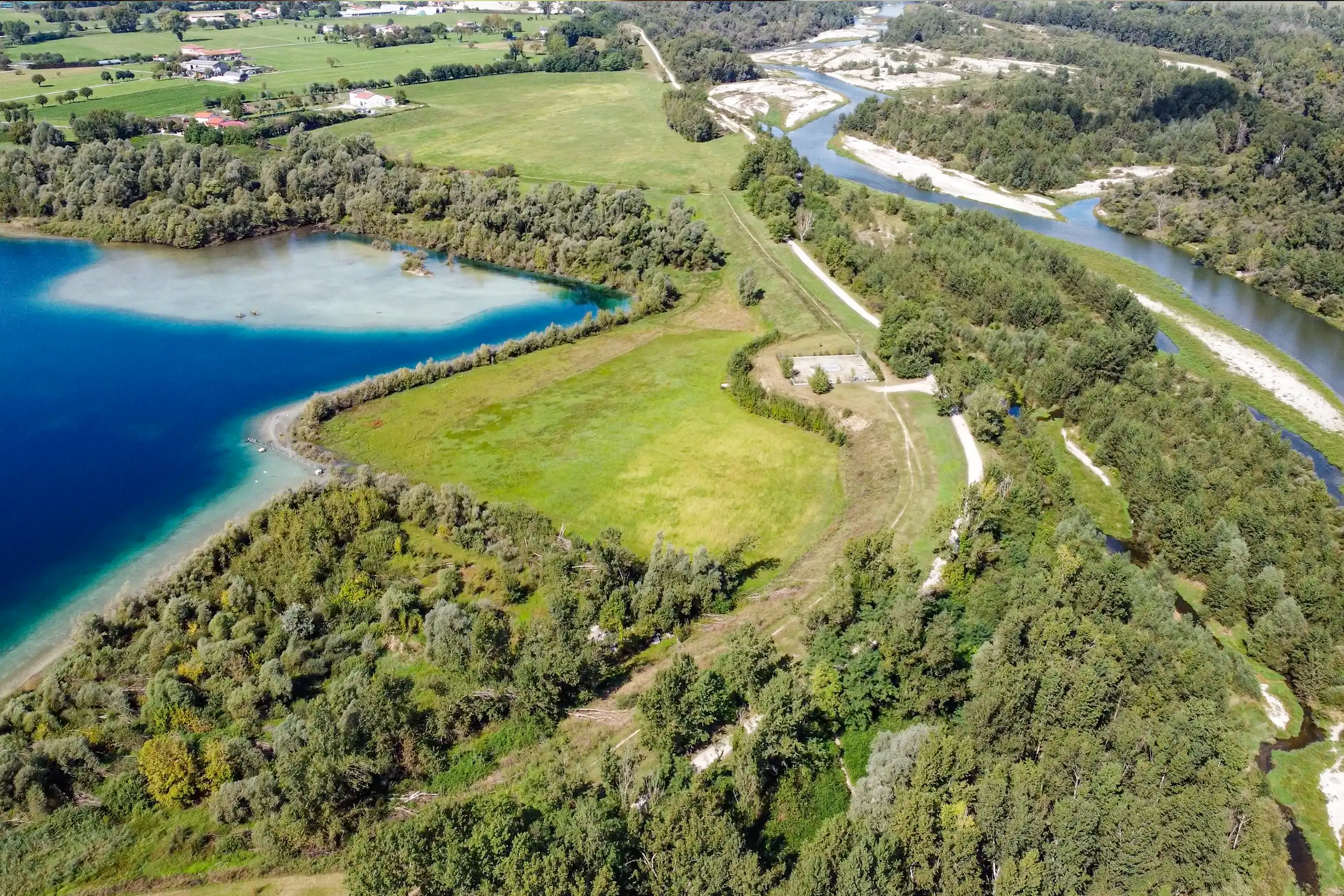
When we talk about the river ecosystem, we must imagine a complex system that goes far beyond the simple riverbed where water flows (the active channel). A healthy river also includes the woods along the banks, which act as wooded buffer strips serving as natural filters for diffuse pollution; it includes the surrounding land that, within the river valley, forms the floodplain, essential for absorbing excess water during floods.
Science describes this system as multidimensional because it develops in four directions: longitudinal (from source to mouth), lateral (the exchange between water and land), vertical (the link with underground water tables) and temporal (seasonal changes). Ensuring these connections is fundamental for biodiversity protection at a territorial scale.

How a river “breathes”: biodiversity and ecological laws
Life in the river follows precise ecological rules: communities of organisms vary along the watercourse, adapting to the current speed and available nutrients.
In mountain stretches, with cold, oxygenated and fast-moving waters, organisms adapted to gravel or rocky beds prevail, as well as species that feed on organic matter coming from riparian woods, such as leaves and other plant fragments.
Moving downstream, the river widens and slows down, creating favourable conditions for the development of algae, macrophytes and more diversified plant communities that physically shape the habitat for fish and insects.
A river network that maintains this natural balance ensures the constant provision of ecosystem services crucial, such as water self-purification and the conservation of fish fauna.
Anthropogenic threats: from fragmentation to the plastisphere
The integrity of the river is threatened by human-built structures, which reduce connectivity, isolating rivers from the surrounding territory, preventing sediment transport and fish migration.
Another serious anthropogenic threat is represented by plastic: these waste materials can transport contaminants and fragment into microplastics that interfere with aquatic organisms; these accumulate, especially in slow or stagnant stretches, contributing to the worsening of water quality and thus creating unfavourable conditions for aquatic fauna.
These pressures, combined with the invasion of alien species and excessive water extraction, reduce the natural resilience of the system. Territorial management must therefore intervene not only with hydraulic defence, but with river restoration to restore lost connectivity and environmental health.
Water resilience and Nature-Based Solutions
To counter droughts and floods, there are various Nature-based solutions that can strengthen the water resilience of territories. Nature-based solutions are strategies inspired and supported by nature — ways in which we rely on “nature” to solve our everyday challenges, as individuals, organisations and societies.
Among the most effective solutions are forest infiltration areas (FIA): lowland forests designed to promote the infiltration of river water into the subsoil. These natural infrastructures act as sponges that recharge aquifers and reduce the risk of downstream flooding. The use of these solutions makes it possible to maintain water services without compromising the ecology of the river, integrating engineering and nature.
Economic value and land planning: the case of the Piave
The proper management of the river ecosystem has a direct economic impact. A study we conducted for the Consorzio di Bonifica Piave quantified in over 21 million euros per year the potential damage resulting from the reduction of water resources due to the lack of balance between withdrawals and ecological flow. Of this damage, 57% would affect agriculture, while over 5 million would concern cultural services, including tourist services such as farm stays and educational farms.
To manage these conflicts and support the territory, there are today various ways to obtain innovative funding dedicated to protection: from participation in European tenders to the creation of payment for ecosystem services schemes (PES), which allow those who actively manage natural resources to be remunerated through voluntary agreements or integration into water tariffs.
River tourism and slow tourism
Rivers offer unique opportunities for slow tourism and the slow enjoyment of the landscape. Land planning can enhance these waterways through cycle paths and nautical itineraries, ensuring that the tourist impact does not damage fragile habitats.
This requires compliance with an articulated regulatory framework – which includes European directives on the protection of water and biodiversity – and coordination between parks and administrations to activate management models that include the maintenance and training of new professional figures for river guiding, essential for visitor safety but still poorly regulated.
Transforming the river into an engine of local regenerative economy means focusing on international quality standards, such as those promoted by the GSTC (Global Sustainable Tourism Council), to ensure lasting benefits for both the environment and local communities.

A project dedicated to the Brenta river ecosystem
The LIFE Brenta 2030 project is a valid example of integrating environmental protection into water service management. The Middle Brenta area is fundamental for the territory, guaranteeing drinking water supply to approximately one third of the Veneto population; however, increasing water withdrawals and water deficit threaten the stability of underground aquifers.
To address this challenge, Etifor supported the activation of an innovative financing mechanism based on the “polluter and user pays” principle. Through the internalisation of environmental costs (Environmental and Resource Costs) in the water tariff – a model approved by the national authority ARERA – it was possible to allocate over one million euros to environmental restoration interventions.
This approach makes it possible to finance nature-based solutions such as forest infiltration areas, which recharge aquifers and protect biodiversity. In this way, the management of water resources becomes a regenerative process, where the protection of the “source” guarantees the security of supplies for the future.
A holistic vision for the future
Modern watercourse management requires moving beyond the logic of emergencies. Investing in water resilience and river restoration is not only a regulatory obligation, but a strategy to guarantee clean water, hydraulic safety and tourism development. The future of our rivers depends on the ability to unite science, economics and public participation in a vision of territorial management that recognises nature’s economic and social value.
