

Territory returns to the centre of planning

Whether you work in corporate sustainability, tourism, or a public authority, in 2026 it will become increasingly difficult to address environmental challenges without starting from the territory. Local communities, ecosystems, production chains, and infrastructure become the concrete dimension through which to interpret impacts, risks, and opportunities related to climate, biodiversity, and natural resources.
In this year, we will see growing attention paid to the role of territories as management units for key environmental sustainability issues: ecosystem conservation, the management of water resources, food supply chains, and the development of solutions to address territorial vulnerabilities and the resulting adaptation actions. In short, a return to the old slogan “Think globally, act locally”, but in a less ideological context, more mature in terms of knowledge and tools, and set within a very different geopolitical landscape.
What did we learn from 2025?
2025 was a particularly intense year for those working in environmental sustainability. In the final weeks of the year, we saw the definitive approval of the Omnibus I package, which significantly resized and simplified the Corporate Sustainability Reporting Directive (CSRD) and the Corporate Sustainability Due Diligence Directive (CSDDD), as well as the postponement by a further year of the European Regulation on Deforestation-free Products (EUDR).
At the same time, growing economic and geopolitical instability has pushed European institutions to reorient political and financial priorities towards energy and raw materials self-sufficiency, alongside security and defence, as demonstrated by the ReArm Europe plan. In this context, the energy and ecological transition must be addressed through the lens of competitiveness.
These changes do not concern the regulatory framework alone. The market is evolving structurally, adopting a more pragmatic approach to environmental issues: climate, biodiversity, and natural resources are no longer treated as separate domains, but as factors that directly affect operational risks, business continuity, and strategic decision-making.
This pragmatism is reflected in the publication by European institutions of the Water Resilience Strategy and the Bioeconomy Strategy: two key areas for both sustainability and the competitiveness of the Union. A sign of a political direction that aims to support sectors capable of delivering environmental benefits and economic growth, while avoiding increased complexity and bureaucracy.
In the 2025 trends we focused on the development of a Nature Positive economy. In 2026, this pathway enters a more mature phase: fewer statements of principle, greater attention to territory, water, biodiversity, and collective action, with closer cooperation between the public and private sectors and communication more oriented towards addressing the vulnerabilities of cities, infrastructure and businesses.

Water Stewardship: a strategic approach to water management
The environment, the economy, food and energy security, and quality of life all depend on a stable and adequate supply of water. Water stewardship has now become a central element of European policies, as demonstrated by the publication of the European Water Resilience Strategy in 2025.
Europe is the fastest-warming continent: according to the European State of the Climate 2024, the increase in average European temperature compared to the pre-industrial period is +2.4 °C, versus a global average of +1.3 °C. This results in more frequent and intense extreme events: prolonged droughts, floods, heatwaves and wildfires, whose consequences affect the real economy of countries. In Italy, for example, 34.8% of manufacturing companies are located in areas with high hydrogeological vulnerability, meaning they are exposed to significant hazards such as landslides and floods (Bank of Italy, 2022). Across Europe, 12% of the river network has exceeded the “severe” flood threshold and 30% the “high” threshold. The consequences are direct: impacts on human health, interruptions to water and energy supply, and economic losses for businesses and agriculture.
For companies as well, water will become central to environmental sustainability strategies. This resource is, in fact, a factor of risk and operational continuity that depends on the catchment context (availability, quality, competition between uses, governance, ecosystems), and its management requires an integrated approach and collaboration with relevant territorial stakeholders. In this context, standards such as the AWS Standard, a global framework for understanding water use and impacts and for working collaboratively and transparently towards sustainable water management at the catchment level; or the CEO Water Mandate, which defines a framework for collective action to engage the private sector in achieving water management objectives at basin scale, will gain increasing relevance.
In 2026 we expect:
- more water stewardship projects at river basin level and based on territorial collaboration;
- analyses of water risks and dependencies at catchment scale (quantity/quality/ecosystems);
- the activation of multi-stakeholder partnerships (utilities, consortia, companies, public authorities, communities);
- stronger links between technical interventions and measurable shared benefits (environmental and social);
- growing interest from the private sector in the AWS Standard and the CEO Water Mandate;
- greater centrality of water resilience in European and national policies;
- the operational rollout of the European Water Resilience Strategy.
MANAGING WATER IMPACTS AND DEPENDENCIES: SANPELLEGRINO AND THE WETLAND RESTORATION PROJECT AT THE GABBIANELLO OASIS
We supported the Sanpellegrino Group in managing its strategic water resources through a wetland regeneration project at the Gabbianello Oasis, in the Municipality of Barberino di Mugello, where the AcquaPanna source is located. The intervention addressed the progressive degradation of freshwater ecosystems caused by canalisation, agricultural drainage and river fragmentation.
The project included:
- expansion of the flooded area (+40%);
- optimisation of the intake from the Tavaiano stream;
- sediment control;
- reforestation and responsible public access measures;
- targeted actions for amphibians and birdlife along the Tyrrhenian migratory route.
SANPELLEGRINO AND THE PROJECT TO RESTORE WATER AND LIFE TO THE BRENTA AQUIFER
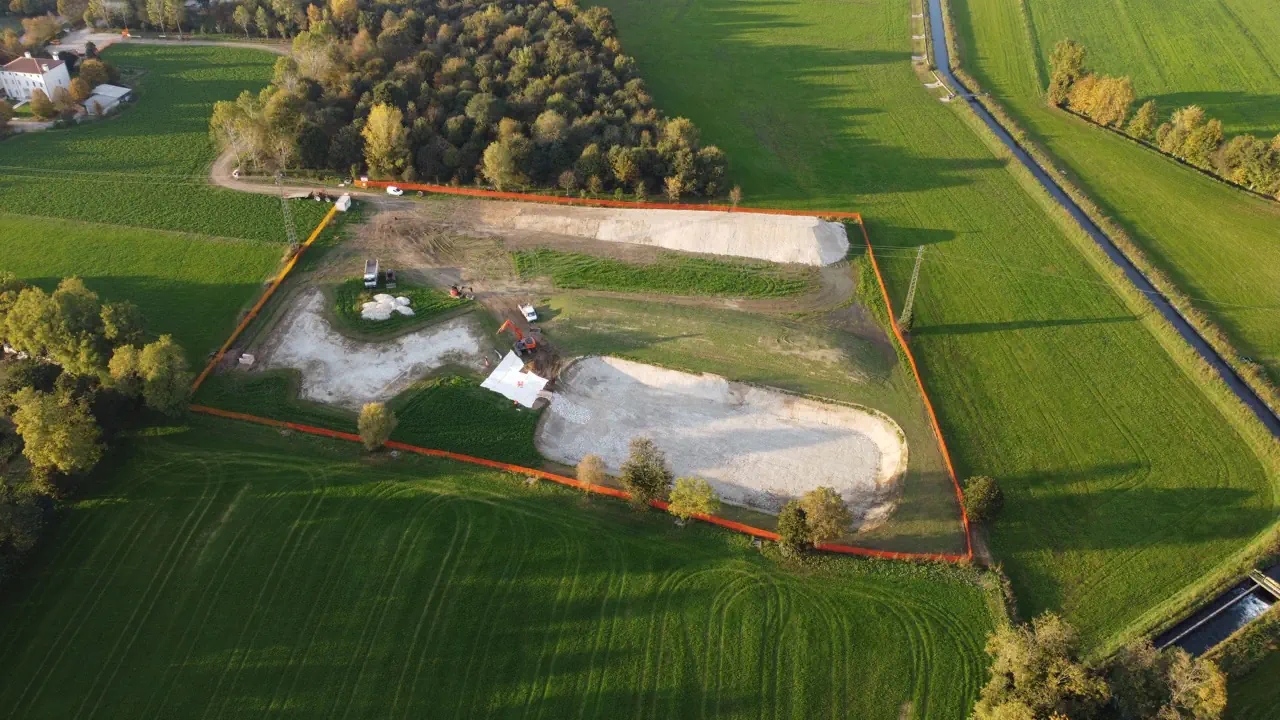
We are also supporting Sanpellegrino in the implementation of an innovative groundwater recharge system for the Brenta aquifer, at Bosco Limite, a multifunctional forest owned by Etifor. The project involves two basins: one for vegetated pre-filtration and one for direct infiltration into the aquifer.
Here we apply the AWS Standard and methodologies developed by the World Resources Institute, such as Volumetric Water Benefit Accounting (VWBA), to measure and enhance the water benefits generated at territorial scale
Tourism destination management, overtourism and GSTC certification
Tourism is one of the sectors where the relationship between territory and community is most evident. In many European cities, mountain areas and coastal destinations, overtourism is generating pressure on services, infrastructure, ecosystems and residents’ quality of life, with repercussions also on the quality of the tourist experience.
In 2026, we expect a shift in perspective: tourism no longer as an isolated sector, but as a socio-cultural system interconnected with agriculture, craftsmanship, logistics, the environment, and services. By moving towards a model that prioritises ecosystem restoration and care, tourism can become a force for regeneration rather than depletion. This requires a holistic approach to destination management and stewardship, in order to maintain balance within this system between territorial, economic, human, cultural and social assets.
In this context, GSTC certification offers a common language and a concrete tool to strengthen governance, credibility and planning capacity for destinations and facilities that choose sustainability.
In 2026 we expect:
- a shift from sectoral policies to integrated destination management models;
- greater attention to the relationship between tourism and resident communities;
- wider adoption of verified sustainable management systems;
- an increase in GSTC-certified destinations and facilities.
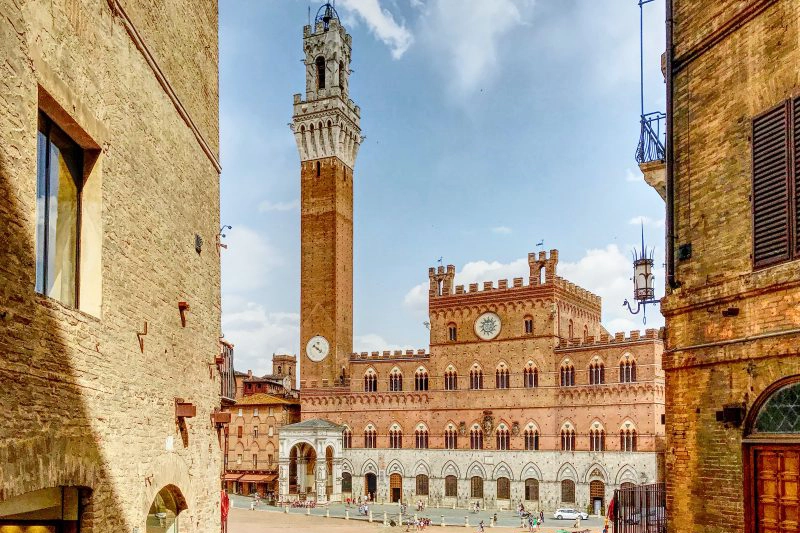
SIENA, THE FIRST ART CITY TO BE GSTC® CERTIFIED
Etifor supported the Municipality of Siena throughout the process that led to GSTC® certification in 2023. The work included territorial analyses, stakeholder engagement, training for public and private operators, and the definition of continuous improvement actions. A concrete example of how art cities can also govern tourism in a more balanced and responsible way.
From a site-specific to a landscape approach
Increasingly, sustainability projects show their limitations when they remain confined to individual sites or isolated interventions. The landscape approach, by contrast, enables coordinated management of resources such as water and biodiversity, which cannot be effectively governed by administrative boundaries alone. Working at the landscape scale means integrating ecological, social, cultural, and economic factors, creating balance between different land uses, and enhancing the resilience of local systems.
In 2026 we expect:
- wider adoption of projects based on integrated territorial governance;
- a more prominent role for Regions as coordinating actors;
- increased large-scale public–private collaboration;
- interventions designed around ecosystem connectivity.
LOMBARDY REGION AND THE CONSERVATION OF 12 REGIONAL PARKS THROUGH THE BIOCLIMA PROJECT
From 2022 to 2024, we supported the Lombardy Region in the BioClima project, an innovative public–private model for biodiversity conservation and climate change mitigation. The project involved more than 20 public bodies, 100 private companies and 4,000 citizens, supporting 12 regional parks.
The project resulted in €5.85 million in investments; 66,000 new trees planted; 300 hectares of improved forests; restoration of wetlands, ecological corridors and Natura 2000 habitats; and FSC certification for 4,635 hectares.

Bioeconomy and provisioning ecosystem services
In November 2025, the European Commission presented the new bioeconomy strategy, recognising it as a strategic sector for the Union’s economic resilience. The bioeconomy uses renewable biological resources (such as land, sea and residues) to produce goods, services and energy, reducing dependence on fossil sources.
In 2026, the central issue will not be production alone, but the sustainable management of provisioning resources: water, wood, biomass and agricultural commodities. These resources are fundamental to economic development, yet highly dependent on the condition of ecosystems. The challenge will be to reconcile the bioeconomy with the circular economy, promoting more qualitative rather than quantitative consumption.
In 2026 we expect:
- greater focus on territorial timber and non-timber supply chains;
- integration between the bioeconomy and ecosystem protection;
- strategies combining efficiency and sufficiency in resource use;
- a more mature understanding of the economic value of ecosystem services.
WOOD4LIFE: STORING CARBON IN WOOD PRODUCTS, FROM FORESTS TO SUSTAINABLE PRODUCTS
WOOD4LIFE is a project co-funded by the European Union with the overall objective of proposing tools and business models to reactivate the forest supply chain and strengthen its central role in climate change mitigation through carbon sequestration and the provision of lower greenhouse gas intensity materials, in line with the Carbon Farming Initiative.
We are implementing this project in several productive forests in Castilla-La Mancha, Spain, to improve carbon sequestration, biodiversity conservation and wood production to supply industries producing long-lasting wood-based products, such as the construction sector.
As a project partner, Etifor is responsible for characterising the supply chain of three semi-finished wood-based products and for developing tools and methodologies to create sustainable blended finance mechanisms that enable the private sector to contribute to climate change mitigation actions, while ensuring remuneration for the actors involved.
Conclusion
2026 will reward those who stop looking for “one-size-fits-all solutions” and start working on territorial specificities: basins, destinations, landscapes and supply chains, in collaboration with public authorities, the private sector and citizens. This is where resilience is built. And this is where impacts become measurable, governable and shared.
Etifor can support companies and institutions in the transition from isolated initiatives to structured territorial pathways: from water to tourism, from nature-based solutions to the bioeconomy and ecosystem services, using scientific approaches and recognised standards.