

What river tourism is, what experiences a river offers as an ecosystem and how a destination can build a sustainable offer.

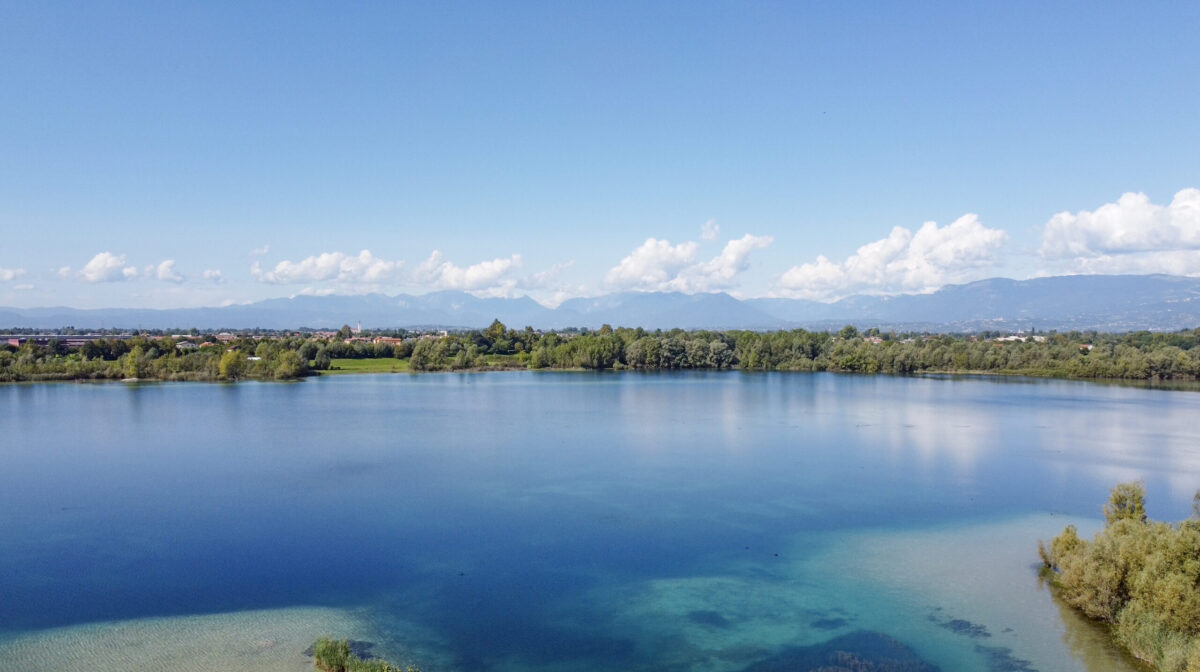
A river is a complex system that provides a wide range of ecosystem services. It protects the soil, ensures hydraulic safety and supplies water for agriculture, livestock farming and civil use. It has always been a landscape and cultural feature too, as well as a trade route. Today, a growing tourism value is being added to these historical roles.
Many Italian destinations, however, have underused river resources or a fragmented tourism offer – a few isolated experiences, with no shared strategy that values the river as an ecosystem. The result is tourism and environmental potential that fails to turn into value for the local area.
This article explains what river tourism is and what experiences a river can offer when it is approached as an ecosystem. It then describes how a destination can build a sustainable offer: from the enabling factors to the practical steps to get started.
Key takeaways
- A river is an ecosystem that provides essential services – soil protection, hydraulic safety, water supply – before it is a tourism resource.
- River tourism offers different experiences within the same river basin: water sports (kayaking, rafting, canyoning), slow navigation (electric boats, houseboats), cycle tourism along the embankments, birdwatching and cultural exploration of the areas the river flows through.
- For a destination, the main advantage is deseasonalisation and synergy with other forms of tourism, such as cycle tourism, which already reached 49 million overnight stays in Italy in 2025 (Isnart/Legambiente).
- Building the offer requires three enabling factors: multi-stakeholder governance, access infrastructure and recognised sustainability standards such as those of the Global Sustainable Tourism Council (GSTC).
- Without planning, river tourism risks generating the same environmental impacts as overtourism.
What river tourism is (and what it isn’t)
River tourism is a territorial development model that uses waterways – rivers, canals, navigable lakes – as low-impact visitor infrastructure. It is not simply a backdrop for recreational boating: it is a way of experiencing a territory through the ecosystem that runs through it.
It differs from large-scale river cruising, which focuses on international routes served by large vessels. That market continues to grow structurally, with 386 active river cruise ships in Europe in 2025 (IG RiverCruise). The river tourism that matters for most Italian destinations is instead local and small-scale: canoes, kayaks and electric boats, combined with cycle tourism and walking routes along the embankments.
How to experience a river: slow tourism experiences
A river can be experienced in many different ways, often within the same basin. Those looking for a more dynamic pace can choose kayaking on the calm stretches of spring-fed rivers, or rafting where the current is stronger. Adventure lovers can try canyoning in mountain sections. Those who prefer a slower experience can hire an electric boat or a houseboat to sleep and eat on the river for several days. Alternatively, visitors can explore the embankments on foot or by bike, or take up birdwatching.
This diversity is well represented in the Veneto region, where mountain streams and canyons coexist with spring-fed rivers and smaller canals flowing into the lagoon. Along the Brenta, visitors can discover the Venetian Villas by boat. The Piave offers cycle routes and embankments to explore on foot. The Sile, the longest spring-fed river in Europe, flows through its Regional Nature Park all the way to the lagoon along the Sile Greenway, past mills and wildlife reserves. The Po Delta, a UNESCO Biosphere Reserve, is a maze of canals, lagoons and islets where flamingos and herons nest (Veneto Region, official tourism portal).
Exploring the areas the river flows through is as much a part of the experience as navigation. Local festivals, food products, villas, museums and mills tell the story of a local culture that river tourism helps to showcase. The economic benefits go directly to the communities living along the river.
Why it pays off for a destination (not just for tourists)
For tourists, river tourism offers a slower pace of travel. For a destination, the main advantage is different: the opportunity to deseasonalise tourist flows and spread them over a wider area, instead of concentrating them in a few high-pressure spots.
This approach fits naturally with the link between cycle tourism and territorial development, a trend that is already well established in Italy. In 2025, cycle tourism reached almost 49 million overnight stays, with an estimated economic impact of €6.4 billion (Isnart/Legambiente, “Viaggiare con la bici 2025/2026”). The share of women grew by 17 percentage points compared with 2024, and Gen Z tourists rose from 9.3% to 17.3%. Multi-location bike rental points also increased, by 47%.
Destinations that combine waterways and cycle paths into a single offer reach the same growing audience, without having to build a tourism product from scratch.
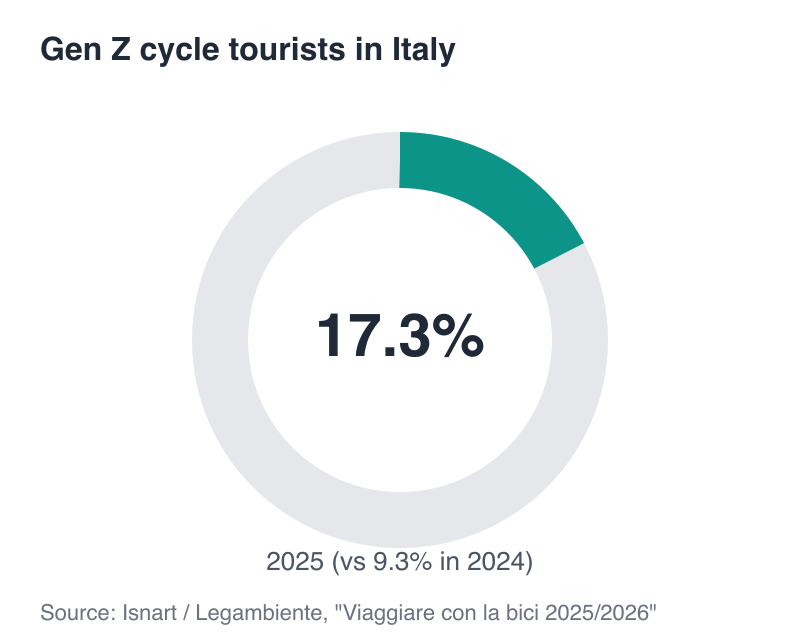
Source: Isnart / Legambiente, “Viaggiare con la bici 2025/2026”
The enabling factors for building the offer
Turning a river resource into a structured tourism offer requires three elements that rarely emerge on their own: shared governance among local stakeholders, adequate access infrastructure and recognised sustainability standards.
The Brenta 2030 Operational Group is a concrete example of multi-stakeholder governance applied to a water resource. Etifor developed it for the Veneto Region between 2019 and 2022. At its core is a Payment for Ecosystem Services (PES) scheme that rewards farms for practices that protect water quality. The scheme is shared by several stakeholders across the Brenta basin.
The principle is simple: bring different actors (public bodies, private operators, associations) to agree on common rules towards a shared goal of environmental protection and enhancement. The same principle underpins any river tourism offer that aims to last over time. Without shared governance, it remains an isolated project.
Risks to avoid: environmental impact and overcrowding
Once governance is in place, the next step is to develop a strategy to protect the environmental and social ecosystem that hosts the tourism offer. Without planning, river tourism can cause the same problems already seen in other forms of overtourism. The main risks are excessive pressure on fragile areas, conflicts with local communities and degradation of the very ecosystems that make the destination attractive.
Riverbanks are ecological infrastructure, not just a scenic backdrop. In 2023 alone, 770.7 hectares of land within 150 metres of rivers were artificialised in Italy (ISPRA, 2024 Land Consumption Report). This figure shows how much access planning needs to take the fragility of these environments into account.
As we have seen, a river is a multidimensional system made up of water, biota, sediments and flow. The concept of ecological connectivity reminds us that its condition reflects the community living around it. A destination that plans access to the river without considering this complexity risks reducing an ecosystem to a mere attraction.

The role of GSTC certification and sustainability standards
Shared governance and careful infrastructure planning, on their own, are not enough to make a tourism offer credibly and tangibly respectful of the territory in the eyes of visitors and operators. The Global Sustainable Tourism Council (GSTC) standards provide an internationally recognised reference for sustainable tourism management. They are based on four pillars: sustainable management, local socio-economic benefits, cultural heritage protection and reduction of environmental impacts.
In 2019, Valsugana became the first Italian tourism destination to be GSTC certified. Etifor supported the process with the requirements analysis, stakeholder engagement and preparation of the certification dossier. The certification is valid for three years and requires continuous monitoring, not just an initial audit.
For a destination that wants to build a river tourism offer, following a standard such as the GSTC means not having to reinvent sustainability criteria that have already been validated, and makes them clear to external partners as well as to visitors.
How to get started: the steps for a destination
Building a river tourism offer follows a four-stage process:
- Resource mapping: survey navigable stretches, access points, available boats and existing environmental constraints.
- Shared governance: bring public bodies, private operators and associations together around a common table, with clear rules on use and maintenance.
- Integration with slow mobility: connect waterways to existing cycle paths and walking routes, creating a single offer instead of separate products.
- Measurement and certification: adopt recognised standards such as the GSTC to make the offer credible and monitor impacts over time.
Etifor supports destinations through its slow tourism consultancy for cycle and walking routes, with strategic development plans and service charters designed for slow mobility, and through sustainable and regenerative tourism experiences for those who want to combine several levers – cycle tourism, walking routes and waterways – into a single territorial strategy.
Frequently asked questions
What is river tourism? It is a form of tourism that experiences the river as an ecosystem – waterways, embankments, biodiversity – with a low impact, often combined with cycle tourism and walking routes.
How can a destination organise a river tourism offer? It takes four steps: resource mapping, shared governance among local stakeholders, integration with existing slow mobility and adoption of recognised sustainability standards.
What are the benefits of river tourism for a destination? The main one is the deseasonalisation of tourist flows, together with the opportunity to spread tourism pressure over a wider area, in synergy with the already growing cycle tourism sector.
Conclusion
A river is first and foremost an ecosystem: it provides essential services to the territory and, increasingly, tourism value too. For most Italian destinations, the real potential does not lie in large-scale river cruising. It lies in local river tourism: kayaking, slow navigation, cycle tourism and cultural exploration of the areas the river flows through. For a destination, the starting point is not the attraction itself, but the ability to structure it effectively and sustainably: shared governance, adequate infrastructure and recognised sustainability standards such as the GSTC.
At Etifor, we support tourism destinations in designing a river tourism offer integrated with cycle tourism and walking routes, from resource mapping to certification. Contact us for a consultation on structuring your destination’s offer.
