

Reflecting on the tourism sector for a more sustainable future

Rethinking Tourism for a More Sustainable Future
The global community is now facing challenges on both environmental and social fronts. Consider, for instance, the transgression of 6 out of 9 planetary boundaries or the delay in meeting the targets outlined in the 2030 Agenda. These scenarios not only demand responsible action towards the environment and communities, but also represent significant risk factors for our economies — including tourism.
Tourism is deeply rooted in the territorial system in which it is experienced: an adventure in a mountain area of one Italian region will differ from one in a neighboring region. This territorial system includes the natural, historical, and artistic heritage (territorial capital), the network of small, medium, and large enterprises (economic and financial capital), the local population (human capital), and the relationships among all stakeholders (social capital). Any pressure on this ecosystem significantly impacts the quality of the tourism offer. Think, for example, of the Vaia storm in 2018, which destroyed 42,800 hectares of forest across the Alps and caused a loss of scenic value. On the social side, the protests of local residents in over-touristed destinations are pushing visitors away.
What Role Does Tourism Play in This Scenario?
Like all economic activities, tourism generates both positive and negative impacts. Here are some examples:
Economic Impacts
Negative
-
Rising prices of goods and services
-
Increased dependence on imported labor
-
Labor exploitation
-
Economic instability due to seasonality
-
Poor sectoral diversification
-
Tourism leakages
Positive
-
Income and standard of living improvements, especially in marginal areas
-
Better services for local citizens
-
Boost to local economies
-
Increased job opportunities
-
Higher tax revenues
-
New business opportunities
-
Export growth
-
Economic multiplier effect
Social Impacts
Negative
-
Changes in social/family/gender relations
-
Shifts in moral standards and values
-
Gentrification
-
Feelings of inferiority
-
Conflicts between residents and tourists
-
Rise in crime
-
Prostitution
Positive
-
Greater socio-cultural awareness
-
Intercultural understanding
-
Empowerment of women and disadvantaged people
Cultural Impacts
Negative
-
Alteration of religious practices and customs
-
Cultural commodification
-
Acculturation
-
Staged authenticity
Positive
-
Cultural revitalization
-
Pride in traditions
-
Preservation of intangible heritage
-
Conservation of historic buildings and monuments
Environmental Impacts
Negative
-
Greenhouse gas emissions
-
Pollution (air, water, noise, solid waste, visual)
-
Loss of natural landscapes and agricultural land to tourism development
-
Loss of open spaces
-
Harm to flora and fauna
-
Animal exploitation
Positive
-
Protection of natural areas or prevention of further ecological degradation (ecosystem services)
-
Reconnection of people with nature
-
Stakeholder education
-
Conservation and funding for biodiversity

What Is Sustainable Tourism?
Sustainable tourism stems from the broader concept of sustainable development. According to the UNWTO – the United Nations World Tourism Organization – it is defined as:
“Tourism that takes full account of its current and future economic, social, and environmental impacts, addressing the needs of visitors, the industry, the environment, and host communities.”
This approach considers all tourism effects, both positive and negative, aiming to minimize the former and maximize the latter, while keeping the system in balance.
A New Approach to Tourism Management
To achieve sustainability goals, a coordinated approach to tourism is essential — both at the business level and within territories.
Within Businesses
A company pursuing a sustainability path must involve both internal and external stakeholders: employees, guests, public bodies, suppliers, local communities, associations, credit institutions, and investors must all be allies in this challenge. It’s crucial to identify a reference figure — the Sustainability Manager — who liaises with all these groups to define a tailored improvement plan for the business.
Within Territories
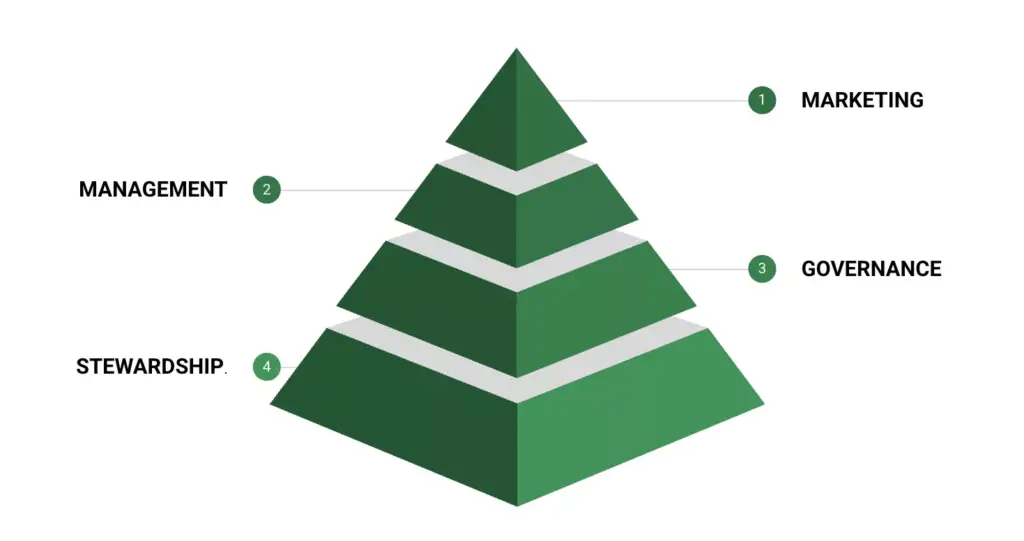
Coordinated sustainable tourism is the responsibility of Destination Management Organizations (DMOs), which are tasked with facilitating public-private partnerships and shaping a shared vision of the destination. Historically, DMOs focused on territorial promotion, evolving into experience designers and governance facilitators. Today’s global challenges call for a further transformation — from promotion agencies to territorial stewards. These stewards care for the destination by balancing the needs of visitors with those of the local community through the protection of resources. This concept is known in the literature as “stewardship.”
Why Do We Need More Sustainable Tourism?
What we need is a paradigm shift: the territory must be a protagonist again, not just a resource to exploit. When tourism integrates with the land, respecting its rhythms and uniqueness, it can generate real, long-term benefits.
This is the aim of sustainable tourism: to create experiences that respect the territory and improve the quality of life for both communities and visitors.
“We believe that tourism is a powerful vehicle for positive change: for the territory, which – under careful guidance – can fully express its tourism potential and reap multiple benefits, and for the traveler, who experiences transformative journeys.”
– Alessia Fiorentino, Tourism and Local Development
In this new context, traditional metrics like tourist arrivals and overnight stays are no longer enough to define success. Instead, we need new, territory-specific indicators to guide continuous improvement.
How Can We Promote Sustainable Tourism?
To make tourism truly sustainable, we need effective tools, long-term vision, and active community engagement. Etifor works in all these areas.
We co-design tailored strategies that aim to enhance ecosystem services, diversify tourism offerings, and regenerate landscapes — integrating environmental, cultural, and economic dimensions.
We are also members of the Global Sustainable Tourism Council (GSTC) and support destinations and operators in obtaining certification based on its international standards.
“International standards like those of the Global Sustainable Tourism Council can guide us in rethinking how we do tourism — placing the needs of local communities and the environment at the center.”
– Federica Bosco, Tourism and Local Development
Sustainable Tourism: Real Examples from Italy
At Etifor, we support territories and destinations in building more responsible, authentic, and regenerative tourism, recognizing that sustainability is not a destination but a continuous journey. Here are three projects we’ve carried out in Italy:
-
Siena – We supported the Tuscan municipality in its certification process aligned with the Global Sustainable Tourism Council (GSTC) criteria, ensuring integrated and sustainable tourism management.
-
Trentino – In this region, we facilitated a participatory process to strengthen local governance and the identity of tourist destinations based on GSTC criteria.
-
Alta Badia – Here we introduced a regenerative tourism strategy, involving local stakeholders in a process that enhances both the landscape and mountain communities.
These cases show that sustainable tourism is not only possible — it increases territorial value and improves the experience for visitors.
If you represent a destination and want to strengthen your territory’s appeal in a sustainable and lasting way, get in touch to learn how we can support you.