

From measurement to shared resource management: a guide for companies looking to reduce their impact on water.

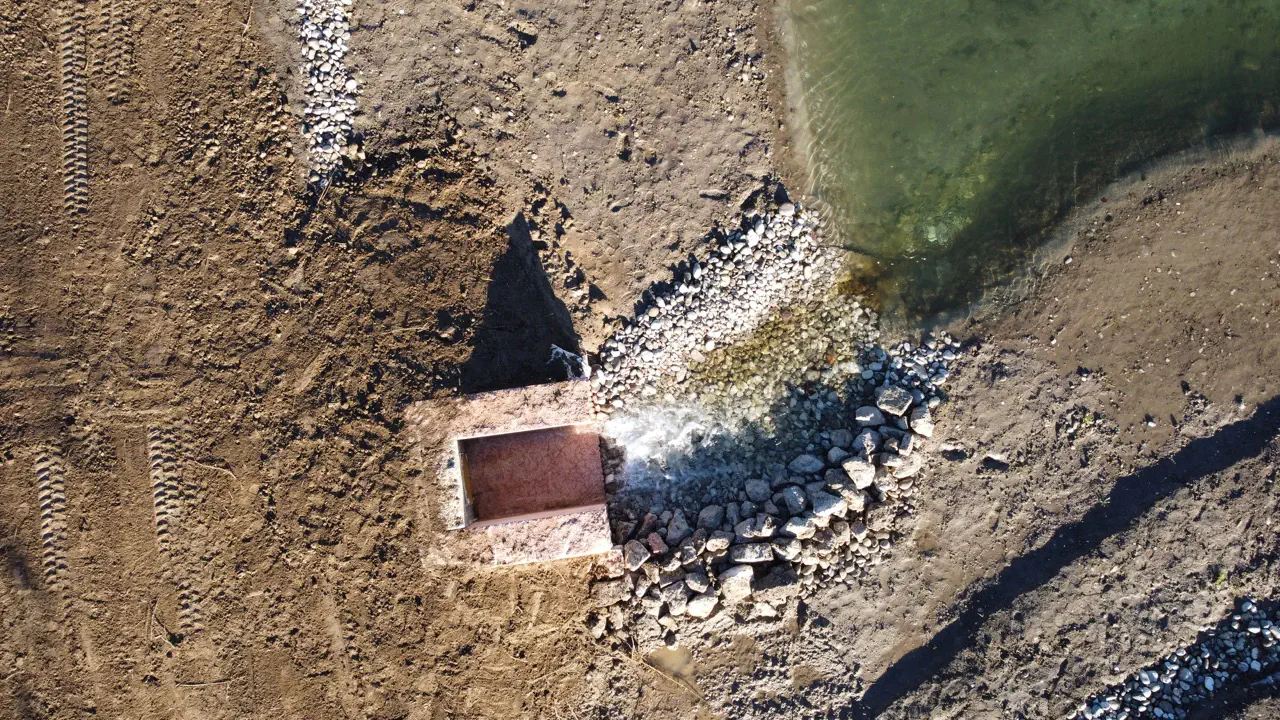
Every product, service or business activity conceals a water consumption that goes far beyond the flow running from taps. We’re talking about the water footprint, the indicator that measures the direct and indirect use of the resource along the entire supply chain. In this article we explain the meaning of this indicator, how the water footprint is measured, what its three components are, and how it is calculated according to the ISO 14046 standard. We conclude by introducing the Water Stewardship approach, through a case study carried out with Sanpellegrino on the Brenta aquifer.
What is the water footprint
The water footprint (or water footprint) is an indicator that measures the use of freshwater by a consumer, a company, a product or an entire territory, considering not only direct withdrawal but also indirect withdrawal, hidden along the entire supply chain.
The concept was born in 2002 from Dutch researcher Arjen Y. Hoekstra, as an evolution of the idea of “virtual water” proposed in 1993 by geographer John Anthony Allan: the volume of water needed to produce a good, even if it is not physically contained in the final product. On this basis, the water footprint makes visible the water flows that move, invisibly, between different supply chains, markets and territories.
Today, however, the term “water footprint” actually identifies two distinct methodological approaches, which share the language but not always the way the final result is calculated: the Water Footprint Assessment by the Water Footprint Network (WFN), with a volumetric approach, and the ISO 14046 standard, with a more properly environmental (LCA-based) approach. It’s worth keeping them distinct from the outset.

Water footprint and carbon footprint: CO2 is global, water is local
Before going into the details of the two methods, it’s worth clarifying why water deserves an indicator of its own. In recent years, decarbonization has been the guiding star of corporate sustainability: measuring and reducing one’s own Carbon Footprint has become a standard for any forward-looking company. But there is another vital element that is emerging strongly among sustainability and risk priorities: water. The climate crisis is altering the water cycle, alternating periods of severe drought with extreme weather events, and for companies this translates into immediate operational, financial and reputational risks.
However, impacts on water and CO2 emissions need to be thought of according to different logics: CO2 is global, water is local. A tonne of CO2 emitted in Milan has the same impact on the global climate as a tonne emitted in Tokyo; for water the situation changes radically, because water impacts depend entirely on the context and the river basin in which one operates. Withdrawing 1,000 cubic metres of water in an area rich in resources does not carry the same weight as withdrawing them in an area affected by severe water stress: this is why calculating the water footprint is only effective if it is contextualized.
The WFN approach: blue, green and grey water
The water footprint according to the WFN method distinguishes three types of freshwater:
- Blue water: the volume withdrawn from rivers, lakes or aquifers and not returned to the basin of origin (for example because it evaporates or is incorporated into the product);
- Green water: rainwater stored in the soil and used by plants, typical of agricultural and forestry processes;
- Grey water: the theoretical volume of water needed to dilute and assimilate discharged pollutants, until environmental standards are met.
Blue water and green water measure an actual consumption of the resource, i.e. water actually withdrawn and not returned to the basin of origin. Grey water, on the other hand, is a calculated value: the volume of water needed to dilute discharged pollutants until environmental standards are met, and is therefore an indicator of pollution impact. Adding together the three components gives the total water footprint according to the WFN method: a more complete picture than the simple withdrawal figure, because it accounts for both physical consumption and qualitative degradation of the resource. It’s important to stress, however, that this sum is a convention of the WFN method, not a step envisaged by the ISO 14046 standard, which we discuss in the next section.
From the WFN approach to the ISO 14046 standard
Today there are two main methodological approaches for calculating the water footprint.
The first is the Water Footprint Assessment, developed by the Water Footprint Network, which is structured in 4 phases: setting goals and scope, quantifying the footprint (blue, green, grey), sustainability assessment and formulation of response strategies.
The second is the ISO 14046 standard, published in 2014, which follows the Life Cycle Assessment (LCA) approach, like other environmental impact categories, in continuity with the ISO 14040/14044 standards. In this case too the process follows 4 phases – goal and scope definition, inventory, impact assessment, interpretation of results – but with a substantial difference: the result is not (necessarily) a sum of water volumes, but rather a single value or a profile of impact indicators (for example the water scarcity footprint, calculated using the AWARE method, which we discuss further on), obtained by applying characterization factors to the volumes of water consumed and pollutants released.
The two methodologies are complementary, but answer different questions: the first is more oriented towards accounting and managing the resource in terms of volumes, the second towards the quantification of the potential environmental impacts of products and organizations, with a methodological rigour recognized at international level.
Quantitative and qualitative impact: the complete water footprint
A complete water footprint assessment according to ISO 14046 considers two dimensions:
Quantitative impact (water scarcity footprint): quantifies the pressure on water availability in the basin. The reference method, recognized internationally by WULCA (Water Use in LCA, a UNEP-SETAC working group) and also adopted by the European Commission’s Product Environmental Footprint, is AWARE (Available WAter REmaining), which weights the volume of water consumed – mainly blue water – based on the relative scarcity of the river basin in which the withdrawal takes place.
Qualitative impact (water degradation footprint): measures the degradation of the resource through impact indicators such as eutrophication, acidification and aquatic ecotoxicity, linked to the substances released in production processes. It is, in a sense, the “ISO 14046” equivalent of grey water in the WFN method: both seek to capture the impact of discharged pollutants, but they do so with different calculation logics – a theoretical dilution volume in the case of grey water, specific environmental impact indicators in the case of LCA.
Only by integrating both dimensions can a realistic picture of a company’s impact on water resources be obtained, avoiding overlooking aspects – such as pollution – that consumption data alone does not capture.
Etifor’s LIFE Svolta Blu project
These calculation methods don’t remain purely theoretical: at Etifor we are partners in the European project LIFE Svolta Blu, which is developing a pilot system for water credit trading based precisely on monitoring, verifying and reducing companies’ water footprint, according to the ISO 14046 standard. The goal is to build a credible and transparent tool that allows companies to measure their impact on the resource and access compensation and financing mechanisms for territorial protection interventions.
Water Stewardship: from measurement to shared resource management
Measuring the water footprint, however, is only the starting point. Water Stewardship is the responsible and shared management of water resources: it means that a company does not limit itself to measuring and reducing its own water consumption, but takes on responsibility for what happens across the entire river basin in which it operates, in collaboration with other local stakeholders – institutions, local communities, other users of the resource.
Companies can approach this in different ways, depending on their role within the river basin. Those who withdraw water for their own activity – for example for bottling – can act with an insetting logic: intervening directly in their own basin with nature-based solutions to offset the withdrawal made, regenerating the resource in the same territory from which it is drawn. It is a targeted intervention, arising from the company’s sustainability objectives, that translates into measurable, concrete benefits for the basin in which it operates.
There are also collective actions, in which multiple stakeholders in the same basin – other companies, public bodies, land reclamation consortia, local communities – coordinate to jointly address the water challenges of the territory, sharing data, objectives and governance. The international reference standard for guiding and validating these interventions, in both cases, is the Alliance for Water Stewardship (AWS).
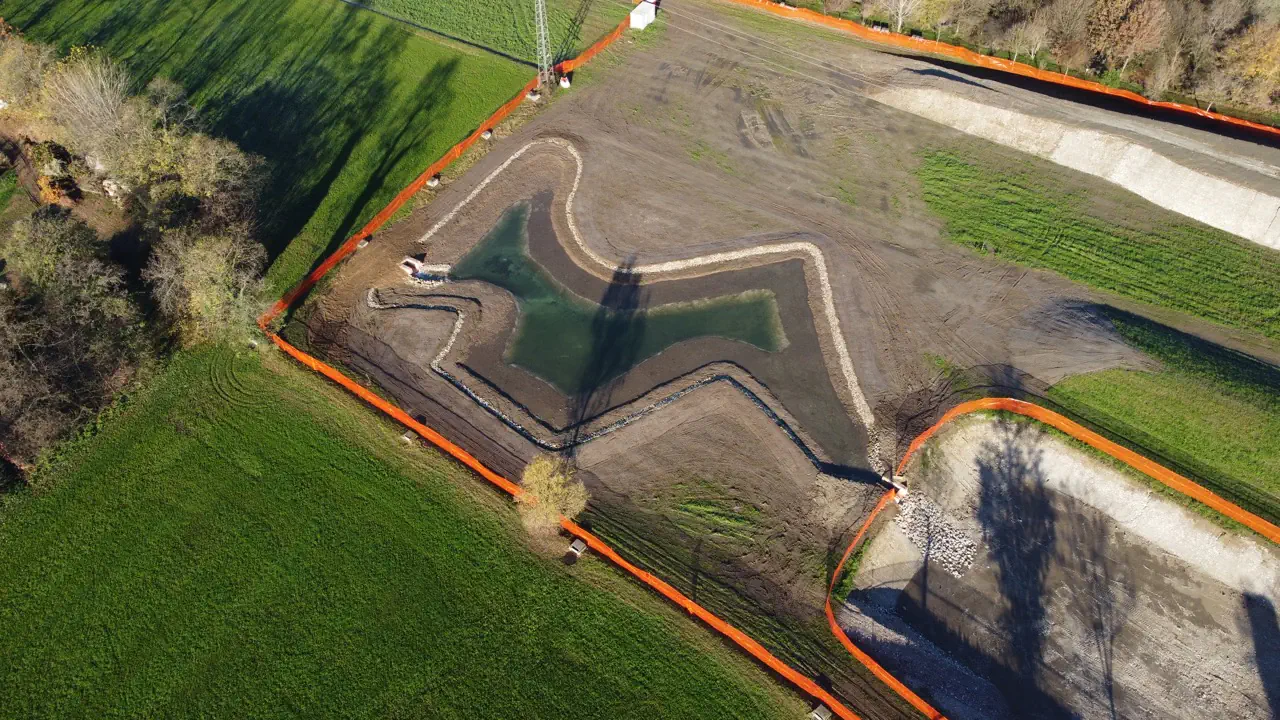
A concrete example of insetting is the project we carried out with Sanpellegrino, on the Brenta aquifer, where the drop in the groundwater level puts the territory’s agricultural and drinking water supply at risk. Following the AWS standard and the Volumetric Water Benefit Accounting (VWBA) method of the World Resources Institute, the project involves the creation of two artificial basins capable of recharging around 758,000 cubic metres of water per year, together with the planting of 7,900 trees to regenerate the area – an intervention that returns more water to the territory than is withdrawn, with additional benefits for biodiversity and the local community.
How Etifor can help your company
Moving from measurement to responsible water management requires specific expertise and an approach tailored to each territory. Etifor supports companies in calculating their water footprint according to the ISO 14046 standard and in defining Water Stewardship and water resilience strategies, turning a reporting obligation into an opportunity for territorial protection and business continuity.