

Designing cycle tourism: networks, services, and strategies for effective slow tourism

Cycle tourism can be a strategic lever for destinations aiming to attract visitors year-round, enhance landscapes and local communities, and promote an authentic slow tourism model. In this article, we explore what cycle tourism is, why it represents a concrete opportunity for territories and DMOs, and how Etifor supports public bodies in designing networks, routes, and strategies. We also present projects developed in the Veneto region, including Cycling in the Land of Venice, support for the development of the regional cycle tourism network, and the management plan for the Treviso–Ostiglia cycle route.
An introduction to cycle tourism
Cycle tourism is a multifaceted phenomenon that encompasses different ways of exploring territories. It includes multi-day, itinerant travel by bicycle as well as single-day excursions that return to the starting point. Cycle tourism can be practiced by setting off from home with luggage, transporting a bicycle to a destination and using it for shorter excursions over several days, or relying on rental services. It can be done on road bikes, mountain bikes, gravel bikes, e-bikes, or purely muscle-powered bicycles.
What remains constant across these many approaches is traveling by bicycle.
In general, it is a way of exploring territories through routes that offer different perspectives, following a slow and continuous rhythm. Unlike sport cycling, cycle tourism prioritizes experience and safety, and is focused on discovering landscapes and engaging with local communities and identities.
It is considered a form of sustainable tourism because it reduces car use, spreads visitor flows across areas not saturated by mass tourism, and enhances nature, culture, and local products. Cycle tourists value well-connected routes, clear signage, rest areas, bike services and e-bike charging points, and the opportunity to discover places and typical products along the way.
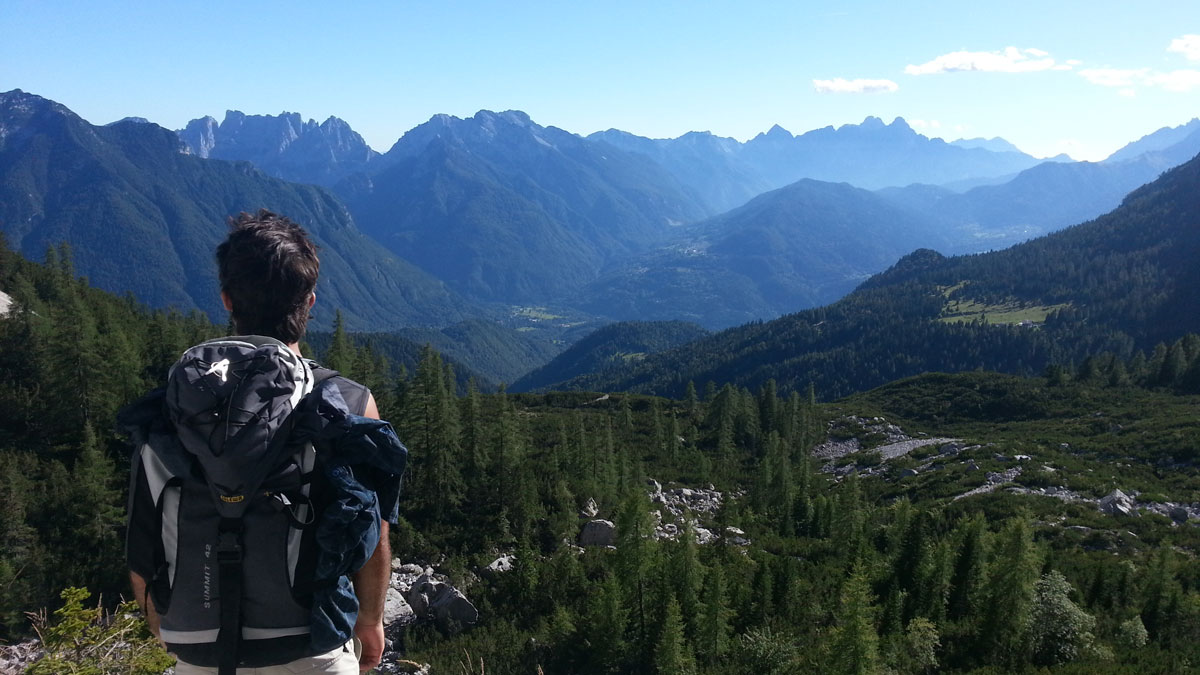
Cycle tourism and slow tourism transform how territories are experienced
Cycle tourism is one of the most effective applications of the slow tourism concept. Here, the core element is not slowness in itself, but the ability to structurally change how a territory is experienced. Bicycles make it possible to access rural landscapes, natural areas, waterways, and historic centers with minimal impact and a continuity that faster, heavier means of transport cannot provide.
When well managed, cycle tourism enables a more balanced distribution of tourist flows, reducing pressure on overcrowded areas while enhancing lesser-known but high-potential locations. This, in turn, supports a broader and more equitable distribution of economic benefits.
Along a single itinerary, cycle tourists engage with a variety of landscapes, services, and local communities, generating diffuse value rather than concentrating it in a few hotspots. This characteristic makes cycle tourism a strategic tool for emerging destinations seeking to position themselves in the slow tourism market with a credible, accessible, and identity-driven territorial offer.
The benefits of cycle tourism for destinations
1. Growing economic impact
The value generated by cycle tourism is steadily increasing, as highlighted by FIAB’s “Viaggiare con la bici 2025” report and analyses by the Isnart Observatory. Cycle tourists tend to spend more, travel across multiple municipalities, and purchase high value-added services along their journey.
2. Seasonality reduction
Ideal cycling conditions in spring and autumn allow destinations to remain attractive outside traditional peak seasons (summer and winter), enabling tourism businesses to operate more continuously or for longer periods.
3. Enhancement of rural areas
As noted above, cycle tourism brings visitors to less frequented areas, creating new opportunities for agritourism businesses, farms, small producers, and local initiatives.
4. Sustainable mobility
Reducing car use means less traffic, lower emissions, and improved quality of life for residents and visitors. A further, often overlooked benefit is that investments in cycling infrastructure and services inspired by cycle tourism also provide residents with immediate opportunities to improve their daily mobility habits and increase everyday bicycle use.
5. An attentive and respectful audience
Cycle tourists seek authenticity, quality, and well-managed territories. This demand encourages destinations to develop offers that are attentive to social and environmental dimensions, indirectly generating positive effects for local communities that go well beyond economic returns alone.
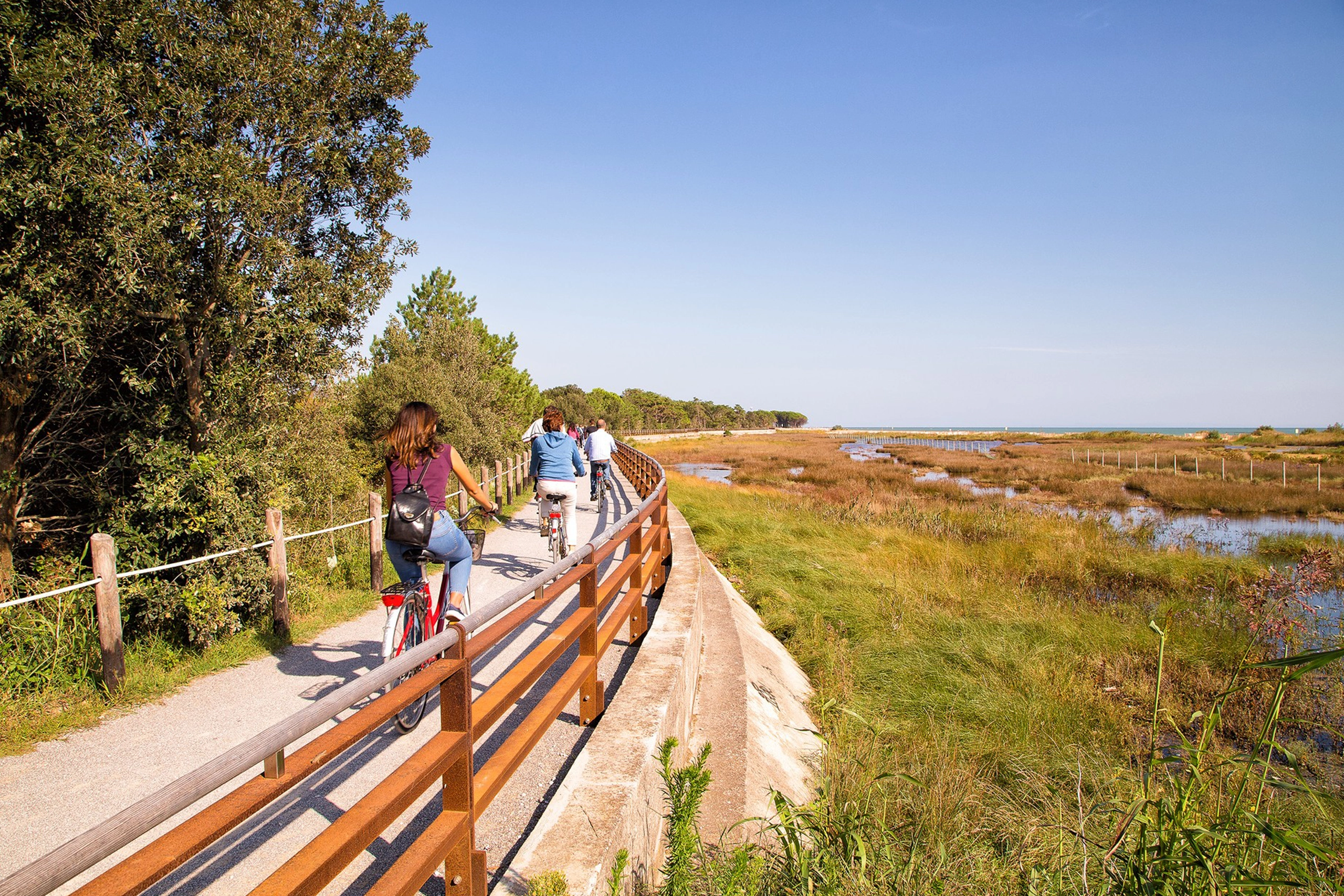
Cycle tourism in Italy: selected Etifor projects
Italy offers unique potential for cycle tourism thanks to its diversity of landscapes, waterways, villages, and rural networks. The Veneto region, in particular, provides an exceptionally favorable context, hosting high-quality territories and routes for cycle tourism.
In this region, Etifor has developed projects that demonstrate how an integrated approach can transform a cycle path into a structured tourism product.
In 2021, after nearly ten years of supporting the Veneto Region in implementing its regional cycle tourism strategy Cycling in the Land of Venice, Etifor acted as technical consultant for coordinating the Product Clubs. Activities included territorial analyses, route definition, and the development of a unified narrative to help cycle tourists and operators navigate the region, culminating in the publication of the Charter of Services for Cycle Tourism.
Another key experience, completed in 2025, is the management plan for the Treviso-Ostiglia Cycle Route, a flagship greenway in Veneto. Over several years, Etifor contributed to developing a management model combining planned maintenance, shared governance, tourism management, and coordinated communication. This approach improved the quality, visibility, and usability of the route, ultimately leading to the prestigious GSTC certification for sustainable tourism management.
These projects show how cycle tourism becomes a true driver of development when analysis, infrastructure, governance, and storytelling are integrated into a single territorial strategy.
How to design cycle tourism routes and strategies
Designing cycle tourism routes requires the integration of technical expertise, territorial vision, and attention to the overall visitor experience. Key elements include:
-
route continuity and safety;
-
clear signage and rest areas;
-
bike and e-bike services;
-
accessibility for different types of cycle tourists;
-
coordinated communication along the entire itinerary;
-
flow monitoring and planned maintenance.
-
activation and animation of the territory to foster the development and organization of cycle tourism services;
-
coordination among involved authorities and tourism operators.
The management challenge in cycle tourism
After years in which efforts were largely focused on the design and construction of new cycle routes and cycling infrastructure, the urgency and complexity of ensuring their long-term management have increasingly come to the forefront.
The cycle tourism product is the result of the integration of at least two fundamental dimensions. The first is the “route” itself, which can take different forms, from dedicated cycle paths to low-traffic roads or trails. The second is tourism attractiveness. This dimension cannot be reduced to “beautiful landscapes” or “good food” alone. It requires active management to ensure that points of interest—whether villages and landscapes or local food and wine—are accessible, recognizable, open, and welcoming to cyclists throughout their journey.
At the same time, managing the infrastructure means continuously monitoring maintenance conditions, safety, and signage, and being able to intervene promptly when issues arise.
There is no single formula, nor a naturally designated body responsible for managing cycle tourism. Organizations in charge of tourism promotion and management, where they exist, rarely have the skills and resources needed to maintain cycle paths and trails. Conversely, the bodies responsible for building and maintaining infrastructure—almost always in place—often lack the expertise required to develop and manage the tourism dimension.
This gap lies at the heart of today’s challenge. After a phase of rapid growth in cycle tourism infrastructure, frequently accompanied by parallel efforts to develop tourism products that were not always fully effective, there is now a clear need for integrated management. A form of management capable of bringing together, under a single governance framework, the two core dimensions on which cycle tourism is built: infrastructure and experience.
Etifor supports public bodies, territories, and destinations not only in designing cycle routes and trails, but above all in developing governance models and operational tools for their management. This is achieved through an interdisciplinary approach that combines strategic tourism planning, environmental analysis, governance, and communication.