

Trentino Marketing coordinates tourism promotion strategies for Trentino, working in synergy with the 12 APTs (Tourism Boards) of the province. For some years now, sustainability has been at the heart of the destination’s positioning, no longer as an isolated initiative but as a common standard across the whole provincial tourism system.
It is in this context that the collaboration with Etifor began: guiding the transition of Trentino’s 12 APTs towards a single international standard, the GSTC, through a certification process that has already involved destinations such as Garda Trentino and aims to extend across the whole province.
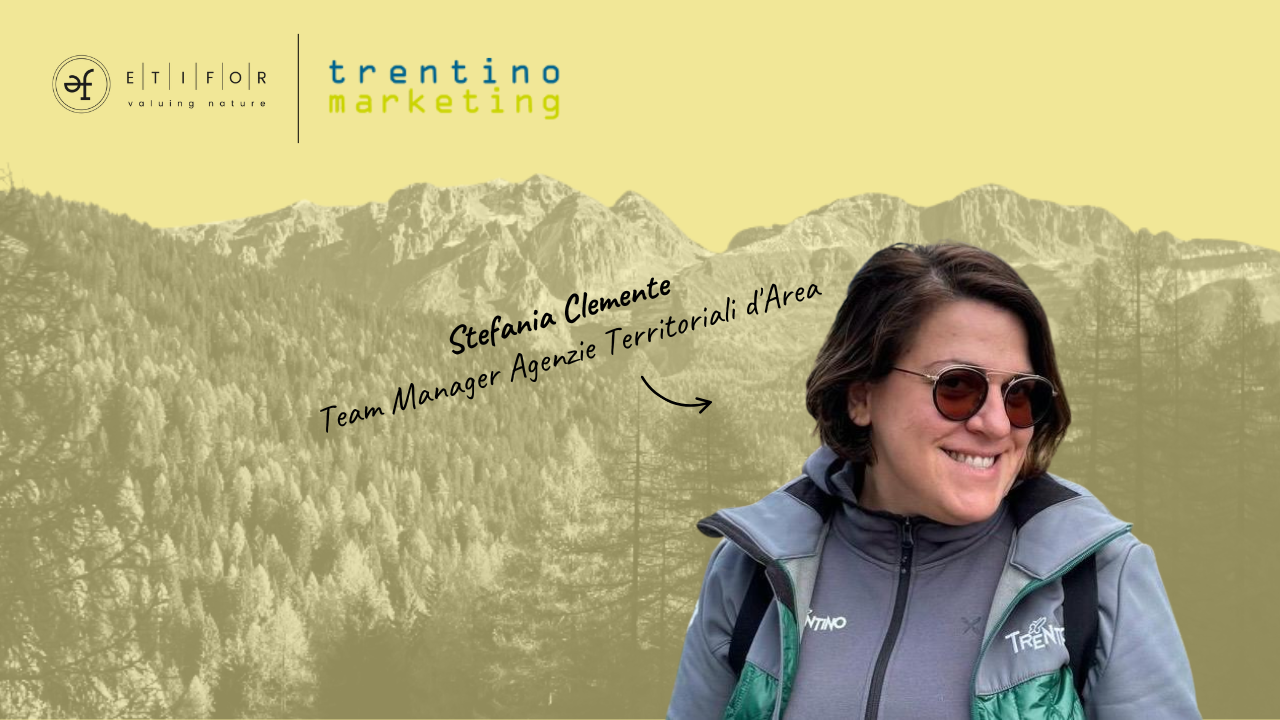
We spoke with Stefania Clemente, GSTC Certification Coordinator at Trentino Marketing, who told us about the journey from the inside.
What need or challenge led you to work with Etifor?
The main need was to move from fragmented initiatives to a systemic approach. In Trentino we have several sustainability excellences, but they are often “patchy” initiatives.
Our challenge, as Trentino Marketing, is to raise the entire provincial destination, bringing 12 APTs to adopt a single, rigorous international standard, the GSTC. We needed an external, authoritative and neutral scientific partner, with the technical skills to guide this transition and the human and professional ability to manage such a complex, multilevel governance.

What has changed, concretely, after this journey?
The deepest change was structural and organisational, starting with the decision to appoint dedicated sustainability figures (Sustainability Managers) in every APT, also consolidating their role as true destination management organisations (DMOs). In addition, we moved from “good intentions” to objective data, finally adopting common indicators to measure tourism impacts. All this materialised in the adoption of Sustainability Management Plans, with principles shared across all 12 APTs.
Which aspect of the journey surprised you most?
We were very surprised by how the attitude of the territories and operators evolved.
At the start of the journey, many saw the GSTC as a checklist of criteria to tick off. As the process developed, the approach changed radically. What was surprising was seeing how the journey generated a strong sense of belonging and pride. By bringing the data together, the territories realised their own value and the good practices already in place. The journey became an important community-building tool among APTs, administrators, operators and citizens.
What is the risk for a tourist destination of not caring about sustainability?
The main challenge our sector has to face is ensuring the vitality and integrity of our cultural and natural ecosystem over time. For a destination like ours, identity, made of nature, landscapes and the authenticity of local communities, is the fundamental value of our tourism product. Our goal is to evolve towards a Community Positive development model, in which tourism is fully functional to local development and acts in service of the territory.
This path requires moving beyond logics of quantitative growth in favour of a broader vision, in which the active involvement of stakeholders and the community in the design, management and enjoyment of experiences becomes the main driver. Looking to the future today means responding to an international demand that is increasingly attentive and aware.
Travellers demand verified guarantees and a concrete commitment to sustainability, which can no longer just be talked about but must be acted on. Investing in respect for cultural and environmental heritage, in synergy with residents, is therefore not only an ethical choice but an essential competitiveness strategy to ensure a prosperous and lasting future for our tourism system.