

From soil care to competitiveness: how regeneration can transform agriculture.
In recent years, some farms have begun to recognize the importance of changing their approach to agriculture — shifting from exploiting to regenerating the natural resources on which they depend. Today, regenerative agriculture is one of the most promising paths toward building a production model that safeguards soil, climate, and biodiversity.
In this article, we explain what it means to “regenerate the land,” what benefits it brings, and how some farms are proving that a different way of cultivating and raising animals is not only possible but also profitable.
What is meant by regenerative agriculture
According to the FAO, regenerative agriculture is a set of practices that “regenerates natural systems, strengthens resilience, and ensures food security while respecting the planet’s ecological limits.”
In other words, it aims to restore the health of agricultural ecosystems, improving soil fertility, biodiversity, and the land’s capacity to retain carbon and water over time.
Unlike conventional agriculture, which tends to degrade natural resources, regenerative agriculture works with nature, not against it. Among the most common techniques are crop rotation, reduced or no tillage, permanent plant cover, integrated water management, and the integration of crops and livestock.
It also differs from organic farming because it goes beyond simply excluding synthetic chemicals: it takes a systemic approach to rebuild the ecological functionality of soils, stimulating microbial life and increasing organic fertility.

The benefits of regenerative agriculture for soil, water, and climate
The advantages of regenerative agriculture go beyond the individual farm — they concern the health of landscapes and the stability of the climate.
Practices such as soil cover and rotational grazing increase organic matter in the soil, improving its structure, water-holding capacity, and resilience to extreme weather.
According to a Nature study, soil regeneration can substantially contribute to atmospheric carbon sequestration, turning agriculture into a key lever for climate mitigation.
In this way, soil becomes a natural carbon reservoir, capable of compensating for part of the emissions produced by human activities.
At the same time, greater biological fertility reduces dependence on synthetic fertilizers and pesticides, improving both profitability and the economic sustainability of farms.
Regenerative agriculture therefore offers a dual opportunity: to regenerate ecosystems while strengthening farm competitiveness.
Regenerative agriculture and open grazing: a natural balance
A central aspect of regenerative agriculture is the integration between livestock and crops. When properly managed, animals become valuable allies in the regeneration cycle.
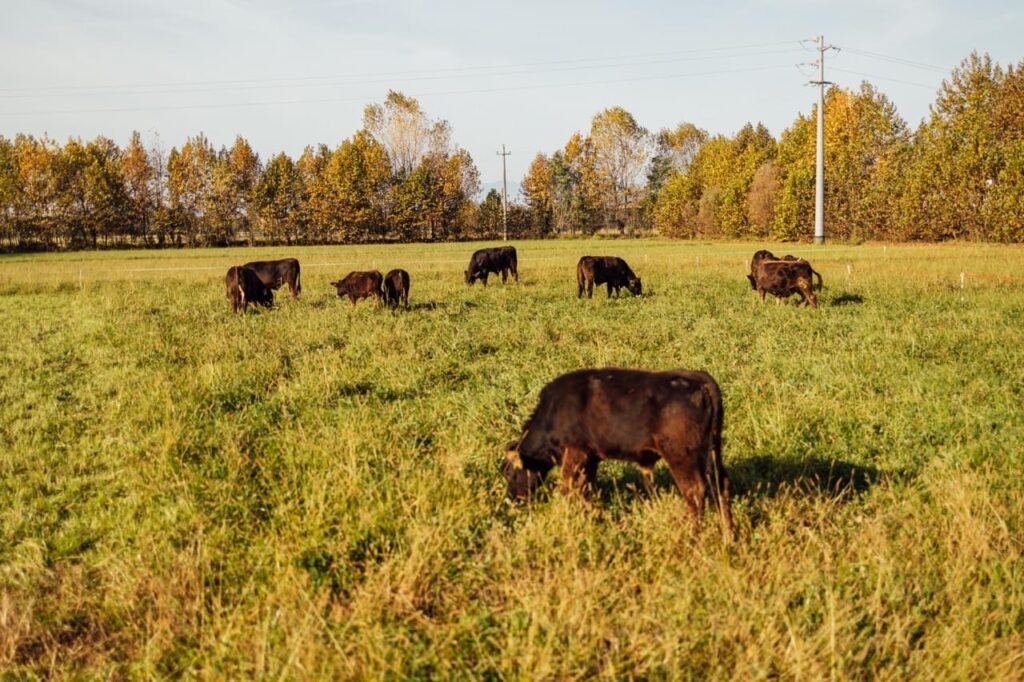
Regenerative grazing, promoted by institutions such as the Rodale Institute, involves the controlled rotation of animals across different plots. This allows grass to regenerate, enriches the soil with natural nutrients, and promotes biodiversity. It also ensures better animal welfare, as herds live outdoors and feed on grass, following their natural rhythms.
Moreover, grazing helps maintain grasslands and pastures, which are agricultural ecosystems of high ecological value. These meadows provide ideal habitats for pollinators and birds, contributing to biodiversity conservation and the resilience of rural landscapes. This is why the EU Nature Restoration Law includes measures to promote grazing and protect meadows and pastures.

The value of permanent grasslands in regenerative agriculture
According to CREA, permanent grasslands are among the most important agricultural ecosystems for soil conservation and climate mitigation.
They are natural, never-ploughed meadows rich in a great diversity of native herbaceous species. These ecosystems improve soil structure and fertility, prevent erosion, and store large amounts of carbon. They also support local wildlife and maintain agricultural biodiversity.
Regenerative management of permanent grasslands — combining sustainable mowing, controlled grazing, and zero chemical inputs — is one of the most effective practices to restore soil health and ensure high-quality agricultural production in harmony with nature.
Verderosa Farm: a concrete example of regenerative agriculture in Veneto
A virtuous example of regenerative agriculture in Italy is Verderosa Farm, founded with the goal of raising native cattle breeds while preserving natural balance and protecting meadows, pastures, and lowland forests.
Verderosa adopts an extensive farming and regenerative grazing model, where cattle live outdoors and contribute to the regeneration of permanent grasslands. The farm applies a scientific approach to soil and biodiversity monitoring, with technical support from Etifor, a spin-off of the University of Padua. It also measures and publishes its environmental impacts annually in a dedicated report.
Every activity — from grazing management to soil care — is designed to enhance fertility and carbon sequestration, while improving both animal welfare and agricultural productivity. This proves that the transition to regenerative models is possible and brings competitive advantages to farms that aim to stand out for sustainability and positive territorial impact.
Finally, Verderosa joined other farms in Veneto and, together with the University of Padua, established the Operational Group PascoLove, which promotes rational rotational grazing practices.