

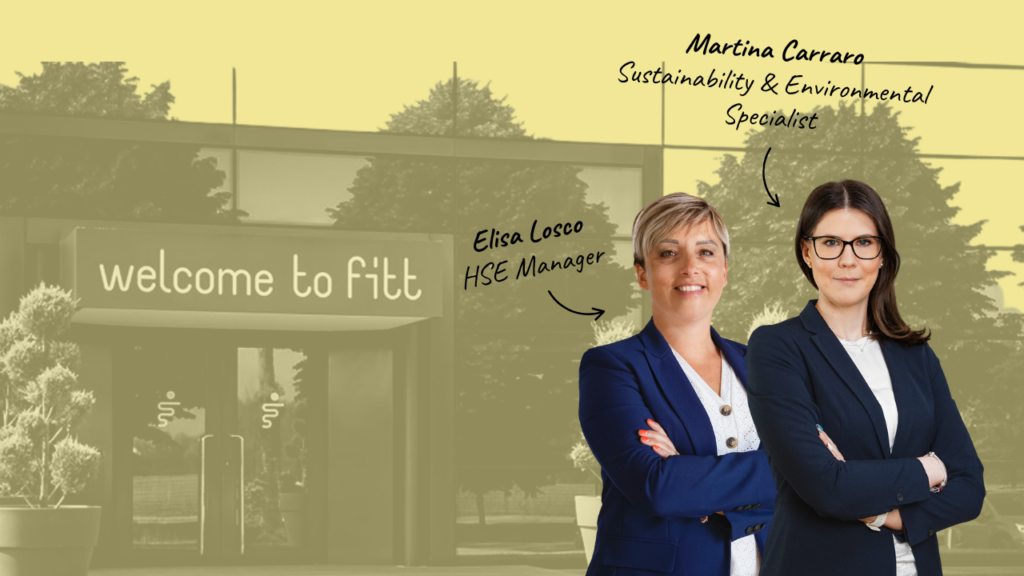
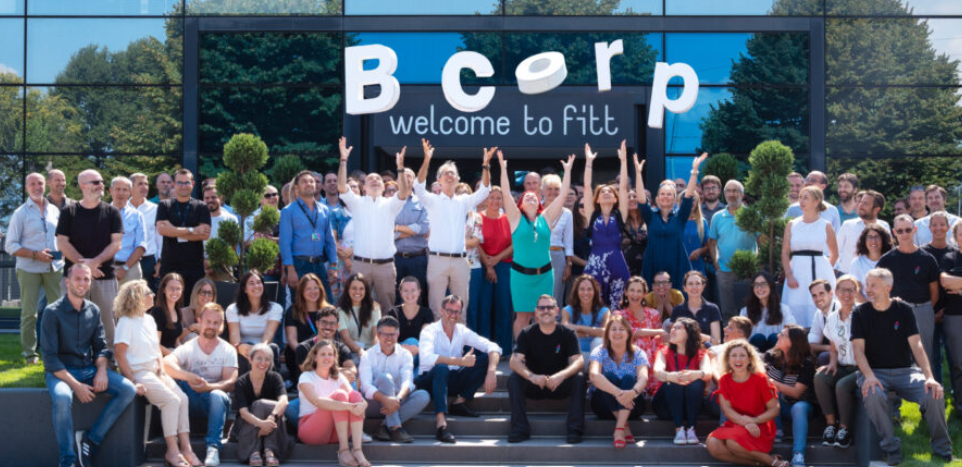
FITT S.p.A. is an international company founded in 1969 in the Vicenza area, now a global leader and pioneer in the development and manufacture of innovative solutions for fluid transport and management, across both domestic and industrial applications. In 2023, the company launched its new Vision 2025–2033, “Carry the Flow of Life Together”, placing water at the heart of its corporate journey as a cornerstone of the flows that FITT manages.
It was through the LIFE Svolta Blu project, created in response to growing water stress in the Vicenza area, that FITT first connected with Etifor. Together, we are working on calculating the company’s water footprint in accordance with ISO 14046: a process that is helping the organisation gain a clearer picture of its water-related impacts, risks, and opportunities.
We spoke with Martina Carraro, Sustainability & Environmental Specialist, and Elisa Losco, HSE Manager at FITT S.p.A., who shared what this work has meant from the inside.
What led you to collaborate with Etifor and take part in LIFE Svolta Blu?
Martina Carraro: Joining LIFE Svolta Blu represents an important opportunity for FITT to explore a topic that is becoming increasingly strategic: the relationship between business operations, water resources, and the local territory. For me, it is particularly meaningful to be able to integrate this type of analysis into the company’s sustainability journey — turning environmental data into actionable insights that can inform decision-making and support continuous improvement.
Elisa Losco: LIFE Svolta Blu and the collaboration with Etifor offer us a concrete opportunity to acquire the tools, expertise, and methodologies we need to better assess our water-related risks, impacts, consumption, and opportunities.
What do you expect from the work underway? What goals have you set yourselves?
Elisa Losco: We expect to gain a clear, objective picture of our water footprint across our production processes and, where possible, along the supply chain. The goal is to identify areas for improvement and define concrete actions to increase water use efficiency, reduce risks associated with water availability and quality, and support future strategic decision-making.
Martina Carraro: From my perspective, the value of this project also lies in the opportunity to integrate water analysis with the tools we already use for environmental assessment — such as LCA, carbon footprint measurement, and performance monitoring. This allows us to read our impacts more comprehensively and strengthens the company’s ability to set targets, track progress, and report on its journey in a transparent way.
What is the main challenge your company faces when it comes to water management?
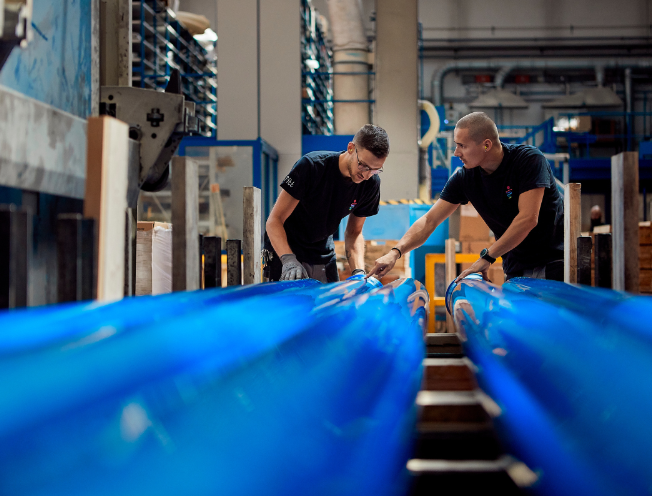
Elisa Losco: The main challenge is ensuring sustainable resource management in a context shaped by increasing climate pressure and growing regulatory and market scrutiny of environmental impacts. For a manufacturing company, it is essential to understand not only direct water consumption, but also dependencies and risks across the supply chain. This requires reliable data, continuous monitoring, and an integrated approach that brings together different functions across the organisation.
Martina Carraro: For us, it’s undoubtedly the shift from a narrow focus on direct consumption to a broader understanding of the water footprint across the value chain. From my point of view, the greatest complexity lies in data availability, quality, and interpretation. Measuring accurately means gathering reliable information, linking it to specific geographical and environmental contexts, and translating it into indicators that are genuinely useful for business management. Only then is it possible to identify the most sensitive areas, assess risks, and design improvement actions that are truly effective.
How important do you think it is to work and collaborate at a local level to address the environmental and climate challenges your business faces?
Martina Carraro: Absolutely essential. Environmental impacts and climate risks do not occur in the abstract — they manifest in specific places, with their own ecological, social, and economic characteristics. Even when we use technical, quantitative tools such as Life Cycle Assessment, it is vital to connect the data to the context in which those impacts arise. For those of us working on environmental performance monitoring, this kind of dialogue matters enormously: it helps us interpret results more accurately, set priorities that reflect real needs, and develop actions that are not only measurable, but genuinely concrete and broadly shared.
Elisa Losco: I would add that collaborating at a local level allows us to share knowledge, identify more effective solutions, and help build networks and partnerships that foster projects delivering wide-ranging environmental and social benefits across the whole territory.
What is the risk, today, for a company in your sector that chooses not to invest in water footprint analysis and in understanding its water-related risks and dependencies?
Martina Carraro: I would say: lacking the tools to understand and anticipate a topic that is becoming increasingly critical to business continuity. Without a water footprint and dependency analysis, a company risks underestimating challenges linked to water scarcity, extreme weather events, evolving regulation, customer expectations, and growing demands for transparency from stakeholders.
Elisa Losco: The main risk is being unprepared for changes that are already under way. Increasing resource scarcity, extreme climate events, regulatory developments, and the expectations of customers, investors, and stakeholders are making it ever more necessary to understand and manage one’s own water impacts and dependencies.
Martina Carraro: What’s more, if you don’t measure, you can’t manage effectively. Environmental data analysis is what allows a company to identify priorities, set objectives, monitor progress, and build more robust mitigation and adaptation strategies.
Does your organisation know how dependent it is on water?
Etifor supports public and private organisations in measuring their water footprint, quantifying water consumption and water-related impacts across the entire value chain in line with the leading ISO 14046 standards.