

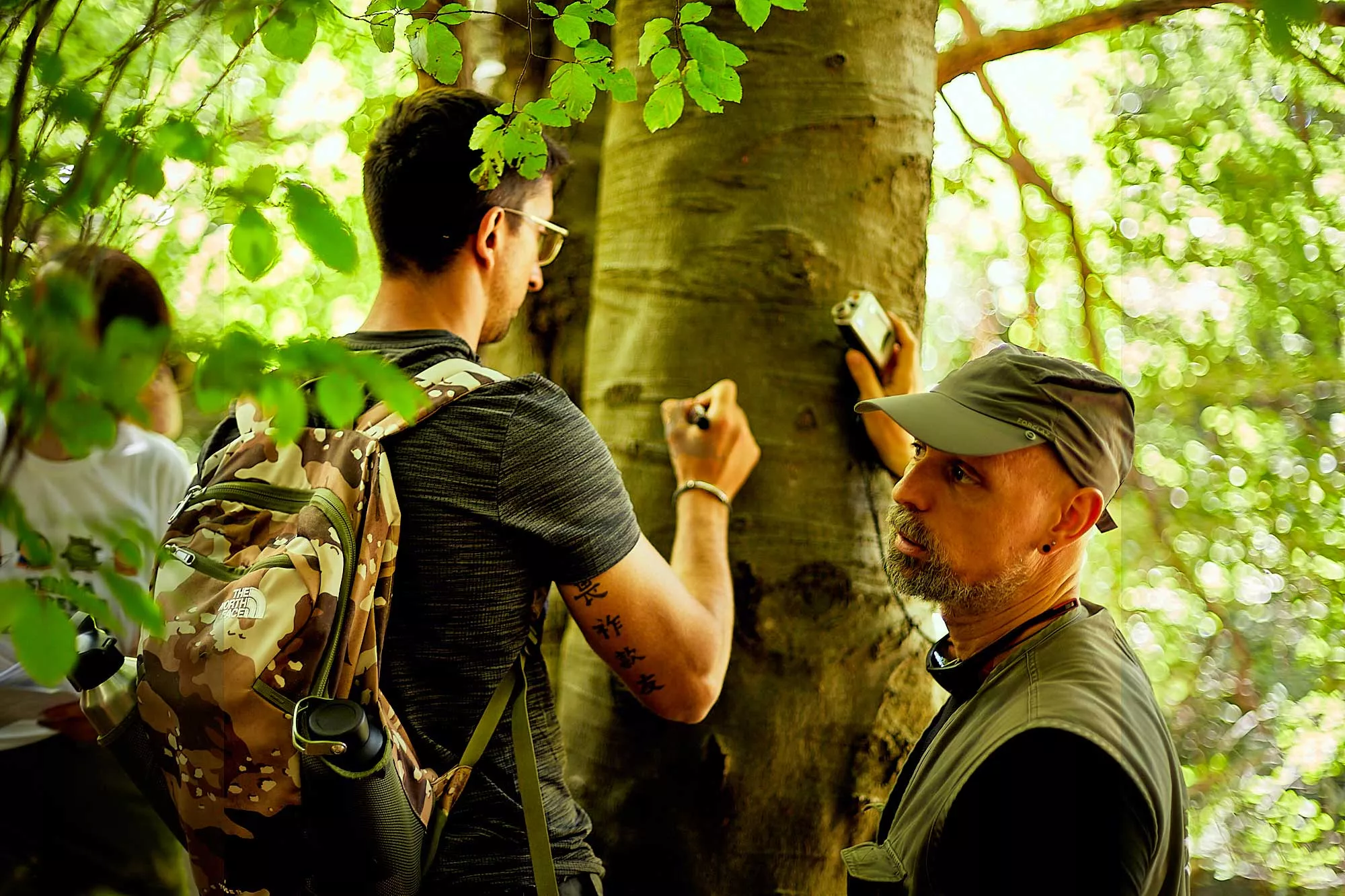
In Italy, over one-third of the territory is covered by forests, but many of them are now abandoned. Small, fragmented properties—often in remote areas and owned by elderly or untraceable proprietors—make effective forest management difficult. This leads to environmental, social, and economic consequences: forests become more vulnerable to the effects of the climate crisis, the risks of fires and hydrogeological instability increase, and the natural and productive heritage is gradually impoverished.
Read MoreIn Italy, over one-third of the territory is covered

- 7-8 October


- Hospitality Day & TTG Travel Experience 2025
- Rimini
- 7-8 October
In October, Rimini becomes the reference point for

- 9 October 2025
- Salone CSR 2025 – Sustainable Supply Chain: Innovating the Pact with Suppliers
- Milano
- 9 October 2025
How can we build truly sustainable supply chains? What tools can companies use to innovate their relationships with suppliers, creating environmental and social value as well as economic benefits?
Read MoreHow can we build truly sustainable supply chains?

- 2025


- Ecosystem Services and human wellbeing
- Responsible Management
- Italy
- 2025
Every day, we benefit from the services that nature provides: clean water, breathable air, fertile soils, landscapes that improve our well-being. But what happens when these services are degraded or disappear? Understanding how ecosystem services work is crucial for those involved in land management and seeking to protect natural capital effectively and sustainably. In this article, we explore the meaning of ecosystem services, their main categories, the benefits they provide, and the tools available to enhance their value, including from an economic perspective.
Read MoreDefinition, characteristics, and benefits

- 2025
In recent years, an increasing number of companies have started setting climate targets aligned with science. These so-called science-based targets allow businesses to align their strategies with global climate scenarios, providing a clear and verifiable framework to reduce emissions. In this article, we explore what these targets are, how the SBTi (Science Based Targets Initiative) and SBTN (Science Based Targets Network) initiatives work, and what advantages they offer compared to other sustainability standards. A useful overview for those looking to start or strengthen their ecological transition journey.
Read MoreIntegrating climate and nature: towards systemic corporate strategies

- 2025
Slow tourism is a response to the saturation of fast, quantity-driven tourism that prioritizes ticking off places rather than truly experiencing them. It also addresses the need to create new models for valuing territories. More and more destinations are choosing to invest in soft mobility, local experiences, and longer stays to improve the quality of their offer, better distribute economic benefits, and promote more respectful ways for visitors to connect with places. In this article, we explore what slow tourism really means, why it’s gaining momentum, and how Etifor can support destinations in this transition.
Read More
Strategies, benefits and challenges for those embracing a new tourism model
- 2025
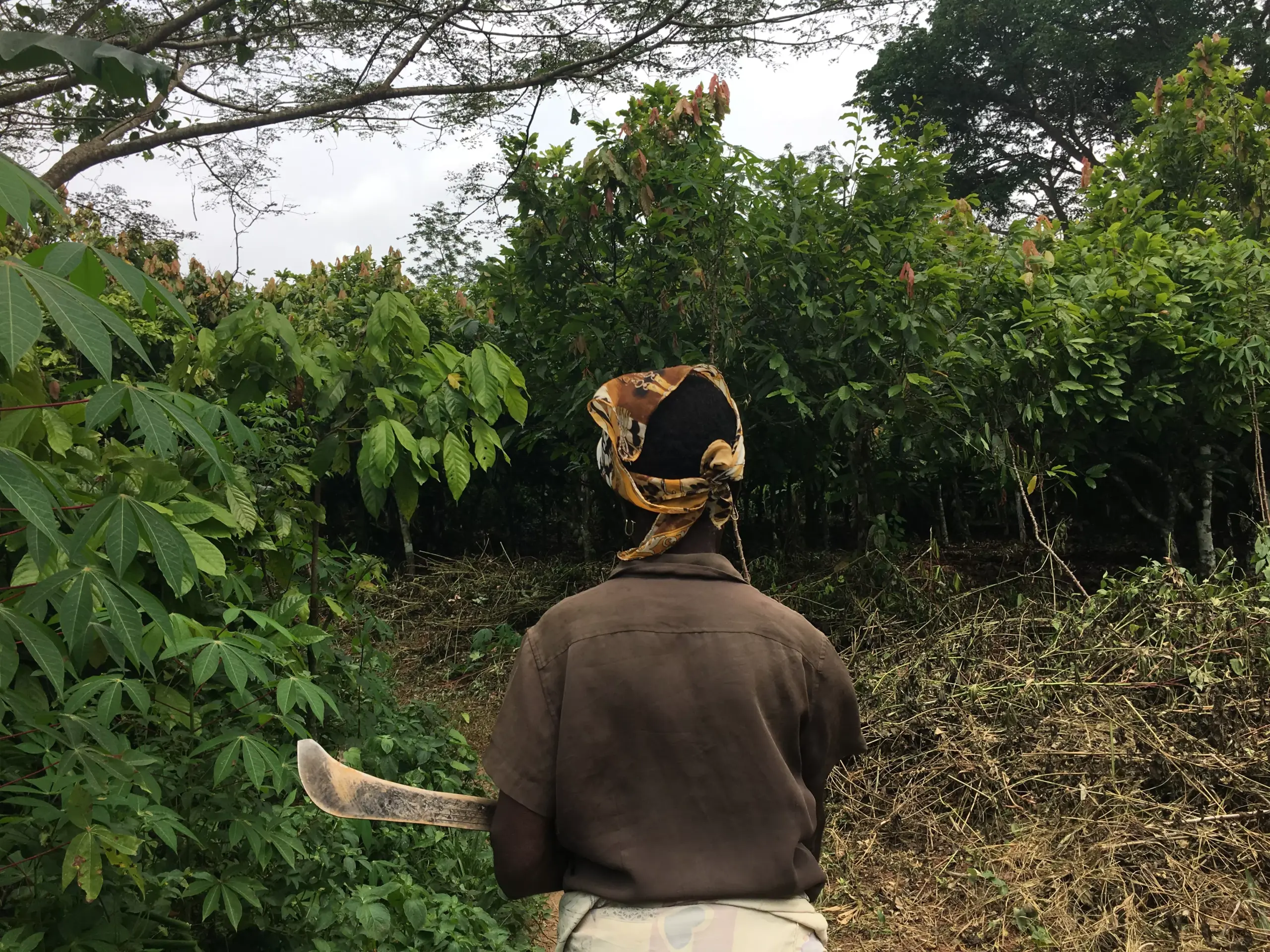
Those who work with the land today have a real opportunity: transforming forests and green areas into allies against the climate crisis. Environmental mitigation is not an abstract concept—it’s a set of real, measurable, and fundable actions. In this article, we explain why mitigation is essential for ecosystem managers, how to implement it, and which tools can help you make a difference.
Read MoreLand and forest managers have a central role in climate mitigation

- 25-26 september 2025
- Sustainable Tourism Course | 25-26 september 2025 Tarvisio
- Tarvisio
- 25-26 september 2025
On the 25th and 26th of September, join this 2-day-long in-person and interactive training class in Tarvisio (Italy): a convenient way to improve your sustainability skills while at the same time learning alongside GSTC experts and fellow sustainable tourism practitioners. The GSTC Italy Working Group organizes the course in collaboration with the Global Sustainable Tourism Council. After the training on September 27th and 28th you will also be able to join the Sustainable Tourism Forum. More details will be provided soon, if you like to be kept informed please register to the Italy Working Group Newsletter here.
Read MoreThe course in a nutshell On the 25th

- 2025


If your company imports raw materials or products that may contribute to deforestation (such as cocoa, coffee, timber, palm oil, rubber, soy, or cattle), you need to know that under the new European regulation known as the European Union Deforestation Regulation (EUDR), due diligence becomes a mandatory step. In this article, you’ll learn:
Read More
How to conduct effective due diligence for raw materials at risk of deforestation.

- 7/11/2024
- Workshop on business and biodiversity at Ecomondo 2024
- Rimini
- 7/11/2024
We are pleased to announce our participation as co-organizers in the conference “How businesses can benefit biodiversity: examples in agriculture and forestry” for Ecomondo 2024. The event will offer practical examples and discussions on how agricultural and forestry companies can contribute concretely to biodiversity protection. Join us to discover innovative and sustainable solutions!
Read More
How businesses can benefit biodiversity: examples in agriculture and forestry

- 14 & 21 September 2024
- Opera Verde: a new tv series about forests
- Online
- 14 & 21 September 2024
Opera Verde is the TV series that brings stories of reforestation and environmental protection to television. On air on Rai 3 on 14 and 21 September 2024 at 3pm, three episodes will let you discover how forests can improve the world around us.
Read MoreOpera Verde is the first programme specifically dedicated

- 14 Settembre 2024
- Mauro Masiero at TEDx Piazzola sul Brenta
- Piazzola sul Brenta
- 14 Settembre 2024
Siamo felici di annunciare che Mauro Masiero, Professore Associato in Economia e Politica Forestale presso l’Università di Padova e Presidente di Etifor, sarà uno degli speaker del TEDx Piazzola sul Brenta il 14 settembre 2024.
Read MoreGoccia a Goccia verso un futuro sostenibile

Solutions for a sustainable future of tourism

- 24-25 september 2024
- Sustainabile Tourism Course | 24-25 September 2024 Trento
- Trento
- 24-25 september 2024
On the 24th and 25th of September, join this 2-day-long in-person and interactive training class in Trento (Italy): a convenient way to improve your sustainability skills while at the same time learning alongside GSTC experts and fellow sustainable tourism practitioners. The GSTC Italy Working Group organizes the course in collaboration with the Global Sustainable Tourism Council.
Read MoreOn the 24th and 25th of September, join

- 25.06.24
Il 25 giugno 2024 a Milano presso il Palazzo Lombardia, si terrà una giornata dedicata ad approfondire il ruolo della finanza sostenibile, delle imprese e delle istituzioni nella conservazione e promozione della biodiversità.
Read MorePresentation of the paper “Sustainable Finance and Biodiversity” and launch of the Italian Business@Biodiversity Working Group
- 2024
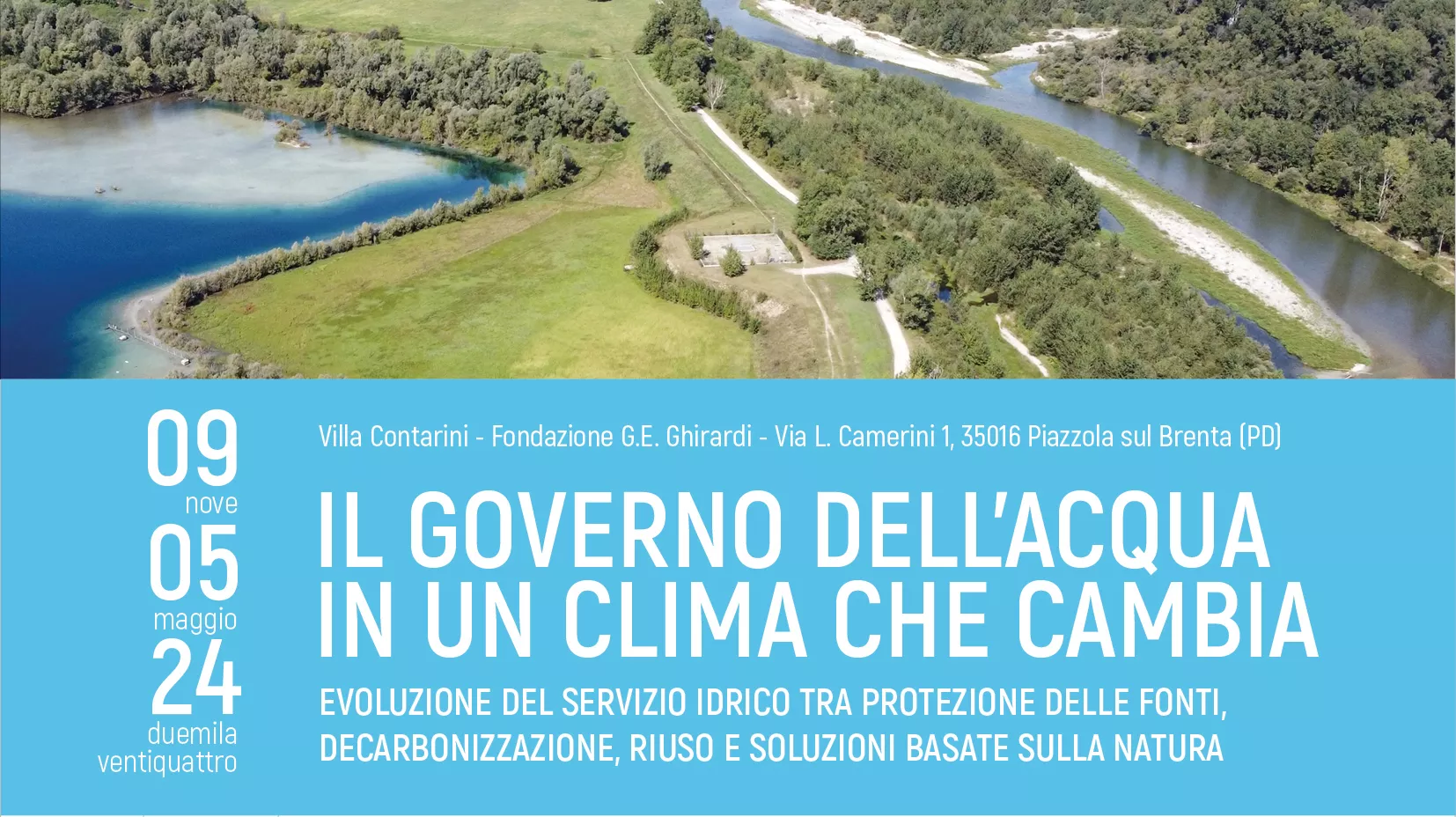
L’evento “Il governo dell’acqua in un clima che cambia” offre un’opportunità per approfondire le sfide e le opportunità nel settore idrico, promuovendo un dialogo costruttivo tra gli attori coinvolti e stimolando azioni concrete per un futuro sostenibile.
Read MoreToward a paradigm shift in water resource management

- 04.04 - 09.04.2024
- Da gestori dell’acqua a custodi del territorio BioClima
- online
- 04.04 - 09.04.2024
Webinar dedicated to integrated water service managers organized by Etifor as part of the BioClima project.
Read MoreThe new role of integrated water service for a future Nature Positive |Webinar.
- 07.03.2023
- Towards sustainable hospitality
- Online
- 07.03.2023
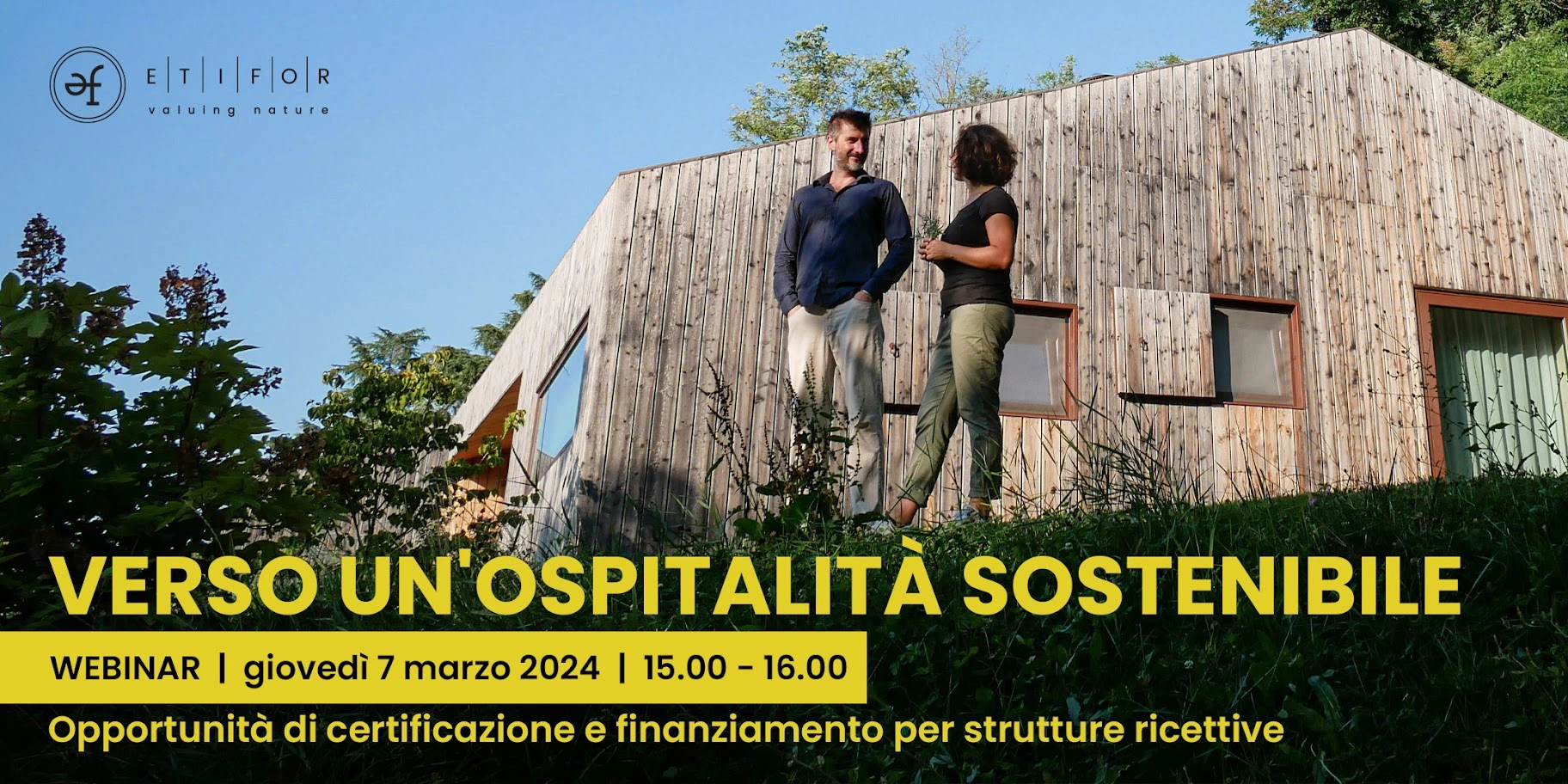
This webinar is for lodging facility managers interested in sustainability certification and public funding opportunities.
Read MoreCertification and financing opportunities for hospitality facilities | Webinar
- 2025
Slow tourism is a response to the saturation of fast, quantity-driven tourism that prioritizes ticking off places rather than truly experiencing them. It also addresses the need to create new models for valuing territories. More and more destinations are choosing to invest in soft mobility, local experiences, and longer stays to improve the quality of their offer, better distribute economic benefits, and promote more respectful ways for visitors to connect with places. In this article, we explore what slow tourism really means, why it’s gaining momentum, and how Etifor can support destinations in this transition.
Read More
Strategies, benefits and challenges for those embracing a new tourism model
- 2025
Those who work with the land today have a real opportunity: transforming forests and green areas into allies against the climate crisis. Environmental mitigation is not an abstract concept—it’s a set of real, measurable, and fundable actions. In this article, we explain why mitigation is essential for ecosystem managers, how to implement it, and which tools can help you make a difference.
Read MoreLand and forest managers have a central role in climate mitigation

- 06/25
Climate change is making Europe the fastest-warming continent on Earth. Extreme events such as floods, droughts and heatwaves are becoming increasingly frequent and intense, with serious impacts on health, the economy, and ecosystems. In this context, water—a limited and essential resource—can no longer be taken for granted.
Read MoreFrom nature to finance: the solutions to make Europe more water-resilient

- 06/25
In several parts of the world, forests are now emitting more carbon dioxide than they absorb. This challenges the traditional view of forests as our best allies in fighting climate change. The most striking case is Canada, where millions of hectares of forest have shifted from being carbon sinks to becoming net sources of emissions.
Read MoreForests should act as carbon sinks. But in some regions, they have become net emitters of CO₂ — a clear sign that new management strategies are urgently needed.

- 2025
The European Union has introduced a new regulation—the EUDR (Deforestation-free Products Regulation)—which sets strict criteria to ensure that products placed on the market are not linked to deforestation. This article explains what supply chain traceability is, why it’s essential to address new legal requirements, and how Etifor can help companies turn this obligation into an opportunity for innovation and competitiveness—thanks to the EMMA approach.
Read More
Why supply chain traceability is a strategic issue for companies importing forest-risk commodities

- 2025
The celebration of a forest heritage looking to the future
The celebration of a forest heritage looking to the future

- 2025
Each time soil loses its fertility, structure, or biodiversity, we also lose the invisible yet essential services that ensure food security, water quality, and climate stability. Soil degradation is a silent but devastating process, often underestimated. Understanding its causes and effects—and especially being able to quantify its impact on ecosystem services—is the first step toward regenerating landscapes and building more resilient territories.
Read More
Understanding soil value to safeguard ecosystem services and regenerate landscapes

- 2025
Knowing and calculating the carbon footprint is now a strategic move for companies seeking to take environmental responsibility. But what exactly does “carbon footprint” mean? How is it measured, and why is it so important? This article answers these questions, explains the differences between product and organizational carbon footprint, and shows how Etifor, through its scientific approach, supports companies in measuring and reducing emissions across the entire value chain.
Read More
Find out why measuring your carbon footprint is essential to reduce emissions and make your business more competitive.

- 17/04/25
The 90-day suspension of US tariffs on timber opens a highly relevant scenario for the Italian wood-furniture supply chain. As the Milan Design Week takes place, the sector faces a crucial moment: if tariffs are confirmed after the moratorium, Italian furniture exports could drop by 5% to 8% in 2025, with negative effects also on the ongoing reconstruction of the national supply chain. It is therefore essential to take a long-term view, diversifying export markets and—paradoxically—strengthening trade relations with the United States in light of tensions with China.
Read MoreAmid export risks and new trade routes, the temporary suspension of US timber tariffs offers Italy a window of opportunity to boost the competitiveness of its wood-furniture supply chain.