
On 2 November in Florence we launched, together with Kering and Conservation International, a collaborative platform for water resilience in the Arno Basin.
Drought, floods and pollution affect the communities, ecosystems and businesses of the Arno River Basin. The 2023 floods in Tuscany caused an estimated €1.89 billion in damages, and no single sector can reduce these risks alone.
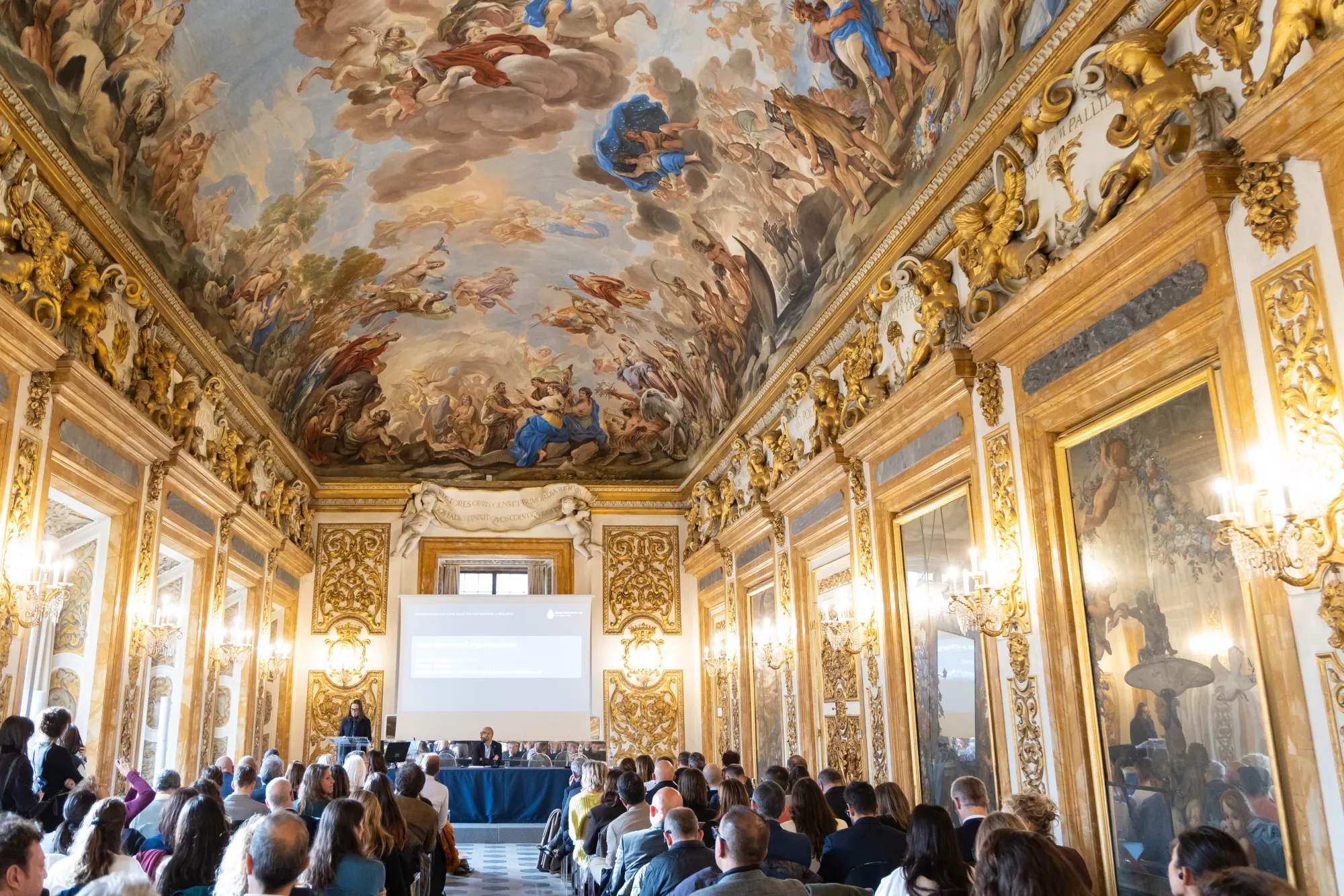
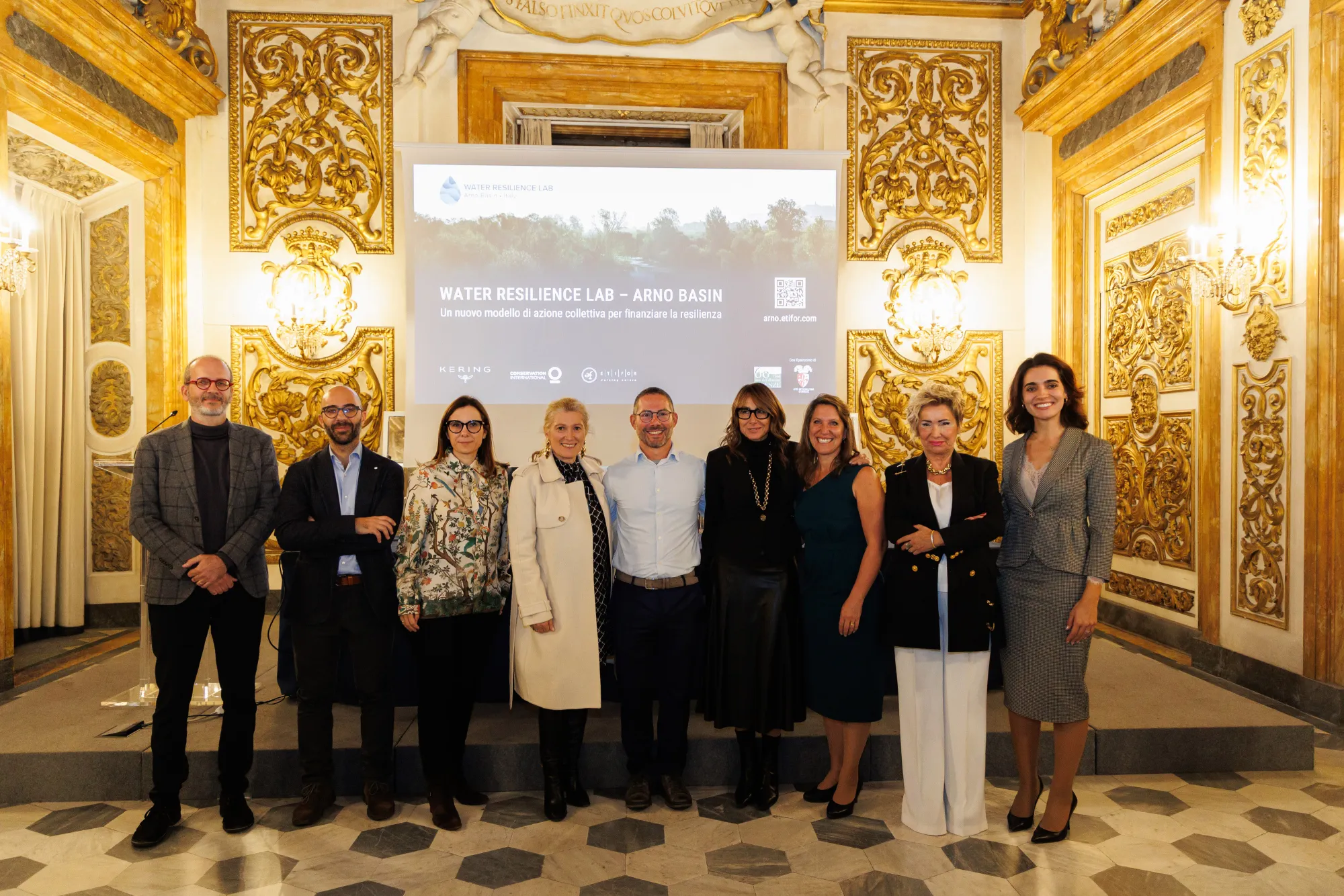
On 2 November, at Palazzo Medici Riccardi in Florence, we launched the Water Resilience Lab – Arno Basin together with Kering and Conservation International. The invitation-only event was part of the programme commemorating the 60th anniversary of the 1966 Florence flood, coordinated by the Comune di Firenze, Regione Toscana, the University of Florence and the Città Metropolitana di Firenze, which granted its patronage.
Date
2 November 2026
Venue
Palazzo Medici Riccardi, Florence
Time
2:45 – 6:00 pm
HOW IT WENT
A new model of collective action to finance resilience
Business representatives attended alongside the Northern Apennines River Basin District Authority, ANBI Toscana, the land reclamation consortia and ANCI Toscana.
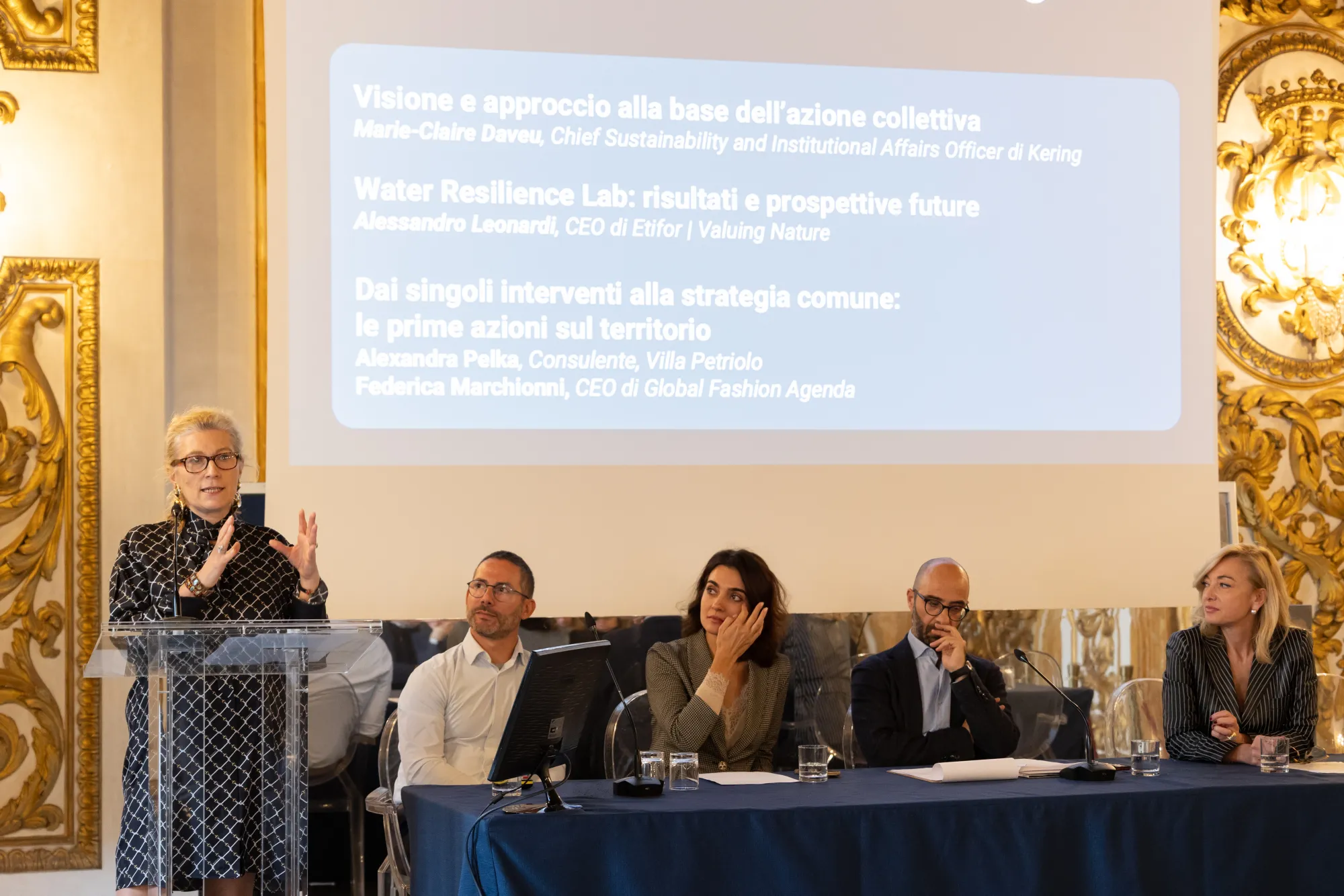
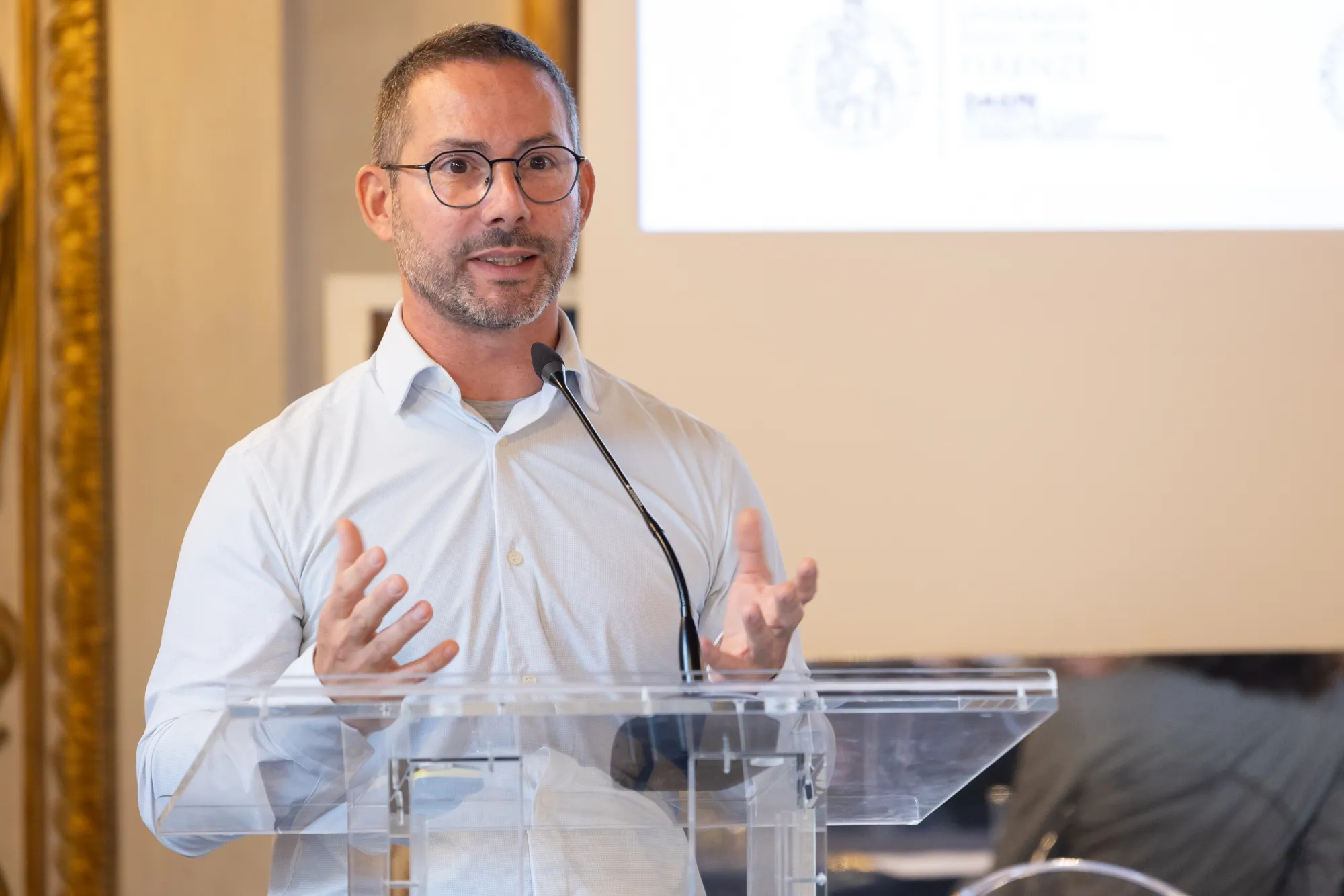
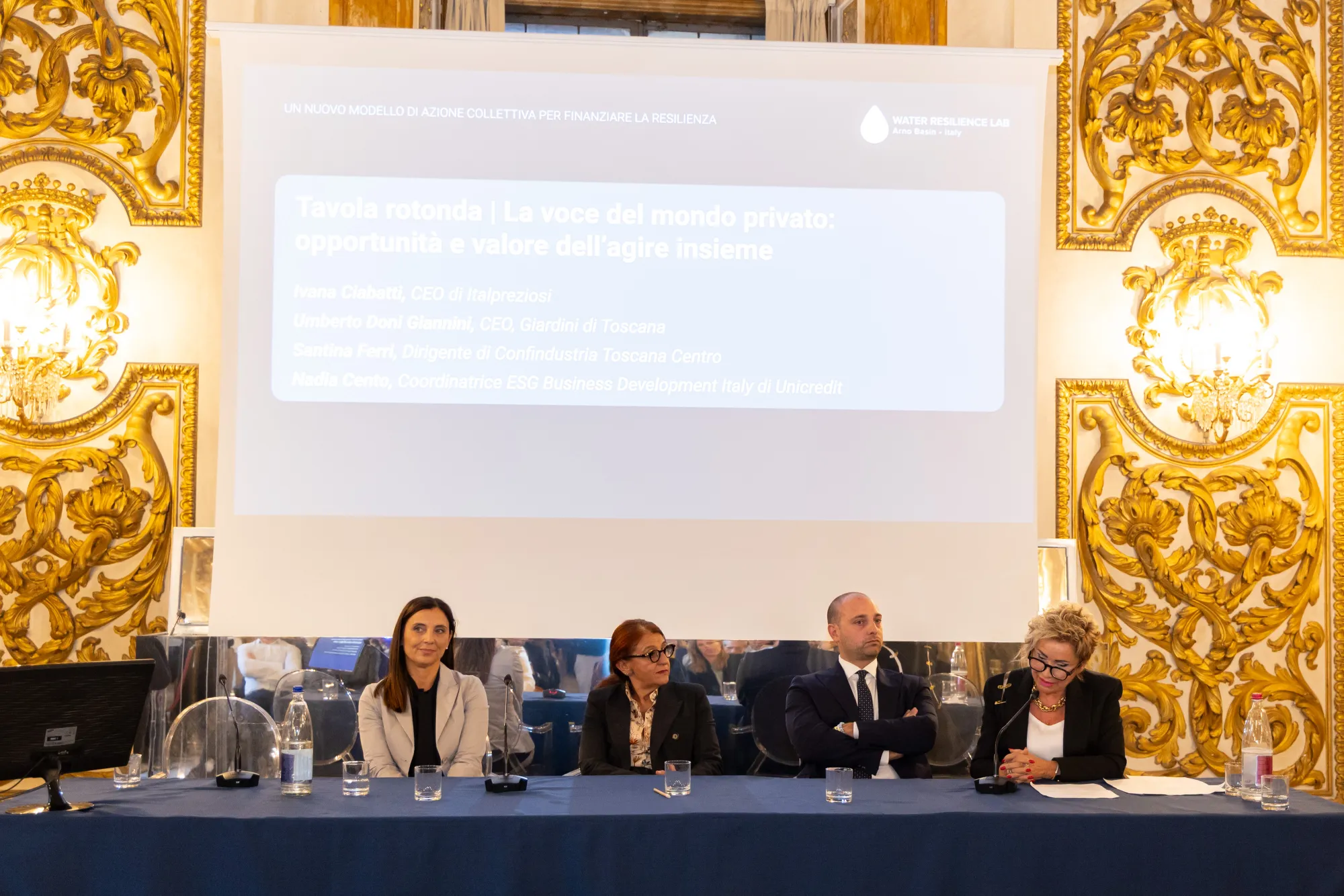
After institutional greetings from the Città Metropolitana di Firenze, Regione Toscana and the River Basin Authority, Marie-Claire Daveu (Kering) set out the vision behind collective action. Our CEO Alessandro Leonardi presented the Lab’s results and next steps. The first actions on the ground followed, with Villa Petriolo and Global Fashion Agenda, and two round tables: one on local governance and the value of public-private collaboration, the other on the role of business. To close, One Water Committee Italy discussed how the model can be replicated from the Arno to the Mediterranean.
During the event the Lab presented its shared roadmap. It builds on the science-based analysis we carried out in 2025 with the DAGRI and DICEA departments of the University of Florence, and on extensive engagement with public and private stakeholders. The roadmap identifies six hotspots where the first nature-based restoration projects are already under way: Villa Petriolo, Ombrone/Bisenzio, Altopascio/Lake Sibolla, Pisa/Era Basin, Usciana/Pescia River and Arezzo/Chiana Valley.
“Now, we need to connect the dots by fostering a dialogue between those who invest and those who know and manage the territory.”
Alessandro Leonardi, CEO of Etifor | Valuing Nature
THE WATER RESILIENCE LAB
A shared platform for the Arno Basin
The Lab brings together public institutions, businesses, academia, the scientific community and financial actors for coordinated, long-term action against water scarcity, drought, flooding and pollution. It is backed by public-private co-financing mechanisms and innovative financial instruments, and aims to become a model that can be replicated in other water-stressed basins.
Analysis undertaken for the Lab estimates that retaining around 48 million cubic metres of water in the basin could help reduce the impact of floods, and that each cubic metre retained through nature-based solutions could avoid around €157 in flood damage.
Alongside Kering and Etifor, the Lab is supported and funded by LVMH, the first company to join at the highest level, Burberry, Giardini di Toscana and Italpreziosi. Other organisations support the project through co-funding on the ground, and Global Fashion Agenda contributes knowledge sharing and industry collaboration.
GALLERY
Discover the project: A Regenerative Management Model for the Arno River Basin
