
A Regenerative Management Model for the Arno River Basin
With Kering and Conservation International we launched the Water Resilience Lab – Arno Basin: institutions, business and science working to retain 48 million cubic metres of water in the basin.

CLIENT

- Kering
PARTNER
- Conservation International
- University of Florence (DAGRI
- DICEA)
“Now, we need to connect the dots by fostering a dialogue between those who invest and those who know and manage the territory.”
Alessandro Leonardi, CEO of Etifor | Valuing Nature
Context
The Arno River flows through the heart of Tuscany. Its basin is home to 2.3 million people and to some of Italy’s most important production districts: textiles, leather, jewellery, paper, food, nurseries and tourism. All of them depend on the health of the river and share its risks.
Today the basin faces the full spectrum of water risks: floods, drought, pollution and ecosystem degradation. The 2023 floods in Tuscany caused an estimated €1.89 billion in damages, and by 2030 the region is expected to experience more than 50 days of heat stress per year.
Isolated interventions are not enough to face risks of this scale: businesses and public bodies invest in the same basin, against the same risks, but in a fragmented way. What is needed is science-based collective action that brings resources, expertise and capital together around the same priorities.
The project
The Water Resilience Lab – Arno Basin, initiated by Kering, Conservation International and Etifor, is a platform that brings together public institutions, businesses, academia, the scientific community and financial actors to regenerate the basin and strengthen its long-term water resilience. The goal is a “Water Positive” basin by 2050, regenerating more water than it consumes. The Lab is part of a global Kering programme aiming for a net positive water impact by 2050 across ten priority basins worldwide: the Arno is the first to be launched and will serve as a model for the others.
The Lab coordinates nature-based solutions and industrial interventions, and funds them through a blended finance model: contributions from private partners, public funding, philanthropy and new instruments such as resilience credits. It is aligned with leading international frameworks, including the CEO Water Mandate, SBTN, TNFD and the Alliance for Water Stewardship.
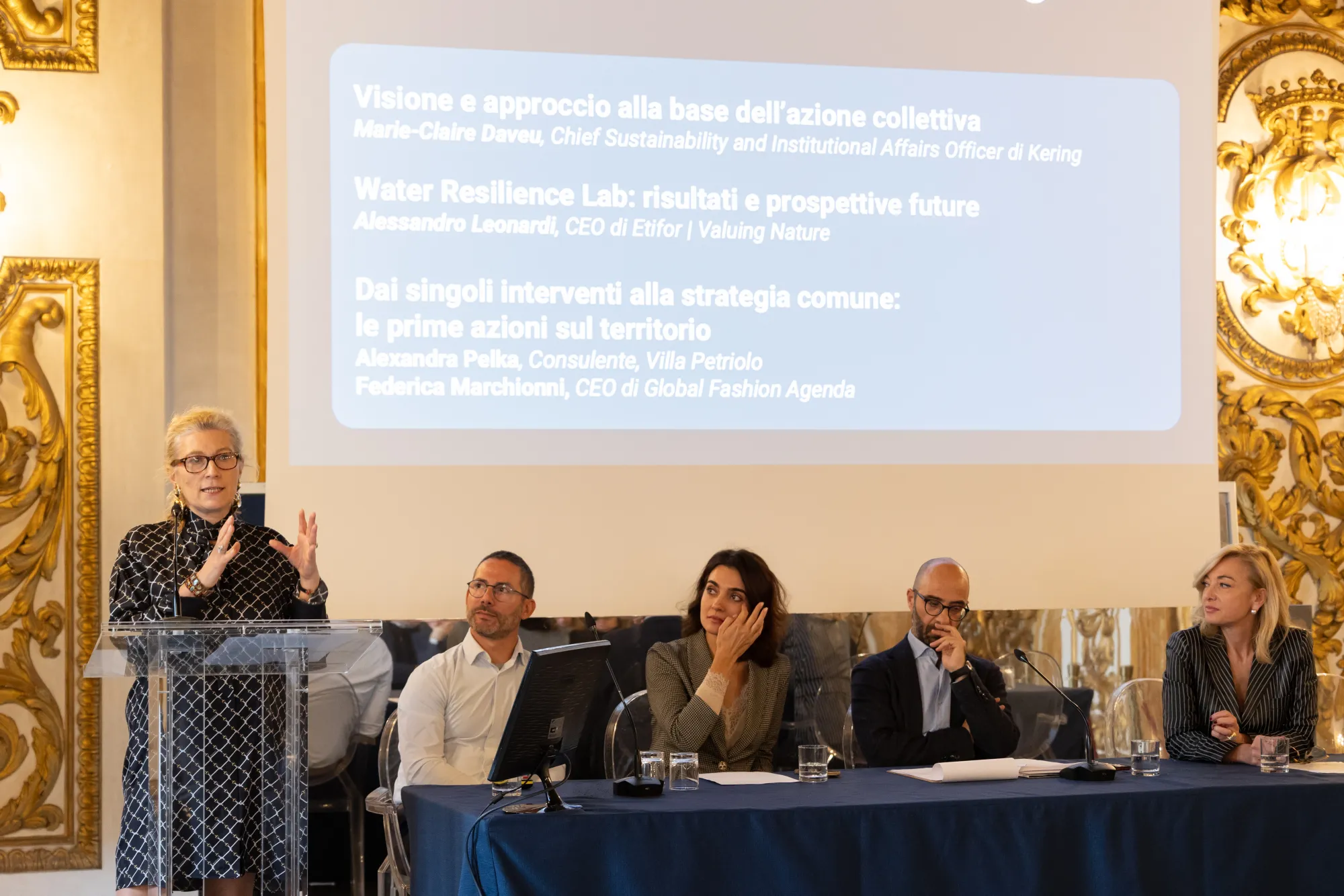
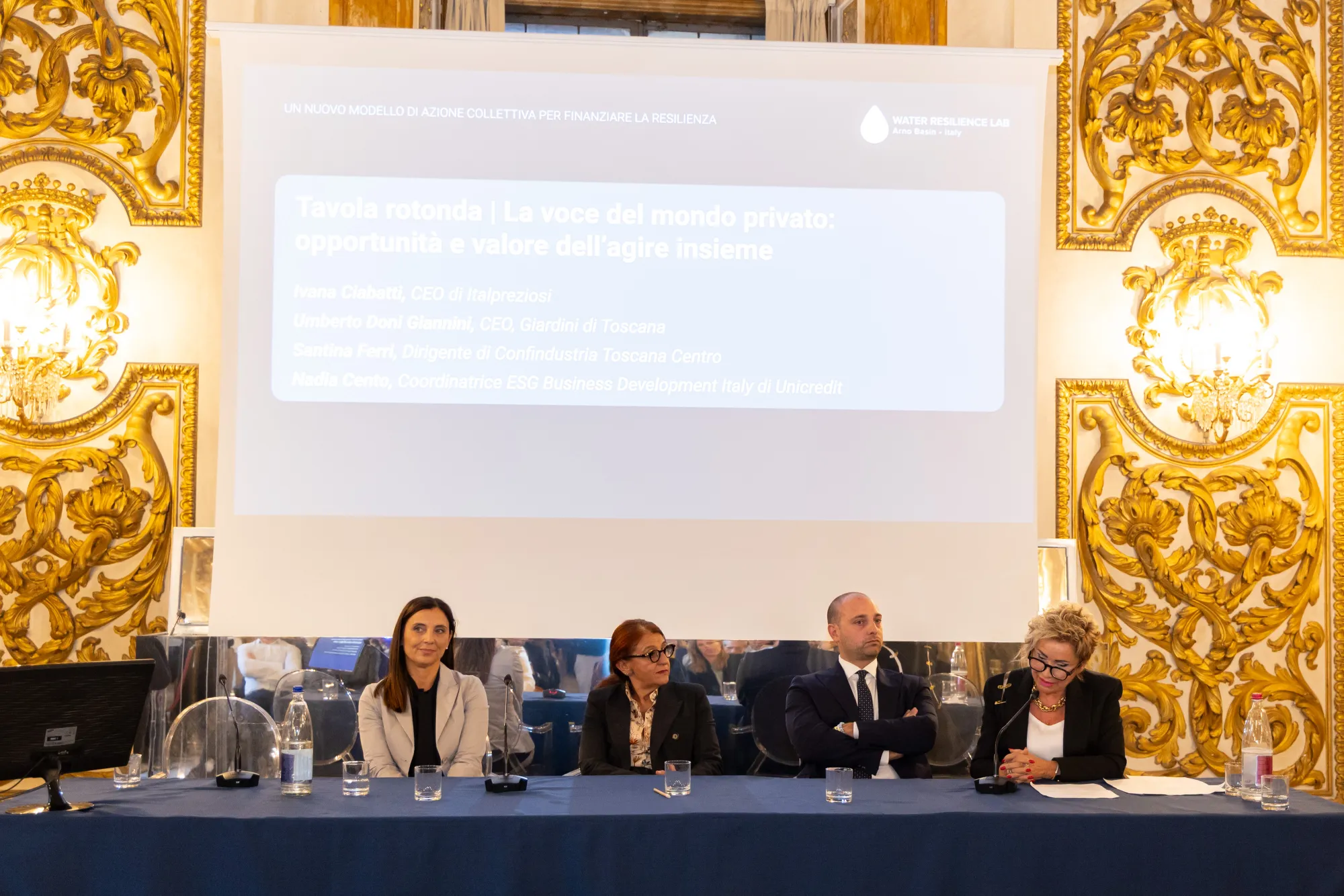
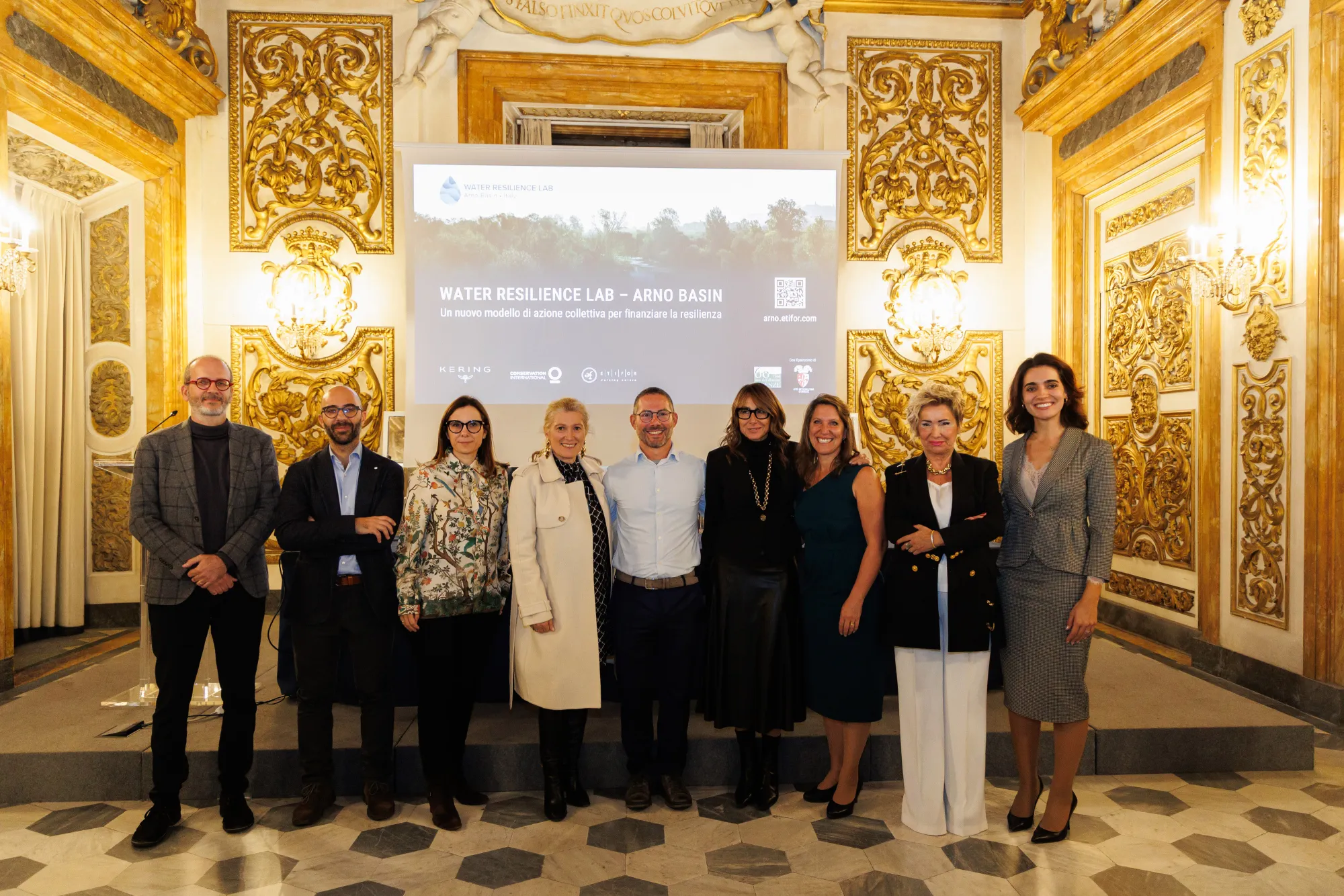
On 2 November 2026, at Palazzo Medici Riccardi in Florence, the Lab was publicly launched together with its shared roadmap. Among the first organisations contributing to and funding the Lab are LVMH, the first company to join at the highest level, Burberry, Giardini di Toscana and Italpreziosi, alongside many others co-funding projects on the ground.
Our contribution
- Scientific assessment of the basin. In 2025, together with the DAGRI and DICEA departments of the University of Florence, we carried out the hydrological, ecosystem and socio-economic analysis that identified where coordinated action can generate the greatest impact. Estimates show that retaining around 48 million cubic metres of water would reduce the impact of floods, and that each cubic metre retained through nature-based solutions could avoid around €157 in damage.
- Roadmap and 6 hotspots. Building on the analysis and on engagement with public and private stakeholders, we contributed to the Lab’s roadmap, based on a Nexus approach linking water, nature, climate and society. Together with Conservation International, the CEO Water Mandate and the Water Resilience Coalition, we are building the portfolio of interventions. The roadmap identifies six hotspots where the first projects are already under way: retention basins in the Pistoia plain (Ombrone/Bisenzio), wetland and forest restoration at Villa Petriolo, wetlands at Lake Sibolla, reforestation along the Era near Pisa, urban green areas for flood protection along the Pescia, and riparian restoration in the Arezzo plain and Chiana Valley.
- Lab secretariat. We coordinate the design and implementation of initiatives and support businesses and public bodies in joining the Lab.
- Financial model. We designed the mix of instruments that supports the Lab: estimates show that every euro invested in nature-based solutions generates around €5 in economic value, and every private euro unlocks €3 of public capital.
Events
Press coverage