
Verderosa: an innovative model of regenerative agriculture
Permanent pastures, hedgerows and the native Rendena breed: a pasture-based farming model that regenerates the land.

CLIENT

- Verderosa Farm
Context
Intensive agriculture is among the main causes of biodiversity loss, soil degradation and pressure on water resources. In the area between Padua and Vicenza, decades of monoculture have progressively eroded hedgerows, small woodlands and permanent pastures, simplifying an agricultural landscape once rich in biodiversity.
For years, Etifor has supported businesses in integrating nature into their strategies, demonstrating and testing our approach in the field. In 2023 we chose to apply these same principles directly, founding a farming business. Verderosa Farm raises cattle outdoors, sells grass-fed beef and manages pastures, woodlands and green areas according to regenerative principles.
The project
This is how Verderosa Farm came to be. The name combines the story of Rosa, who managed these same lands for years and passed on her practical knowledge, with the green vision of the founding partners: the same people who founded Etifor, always focused on putting nature at the centre of decisions.
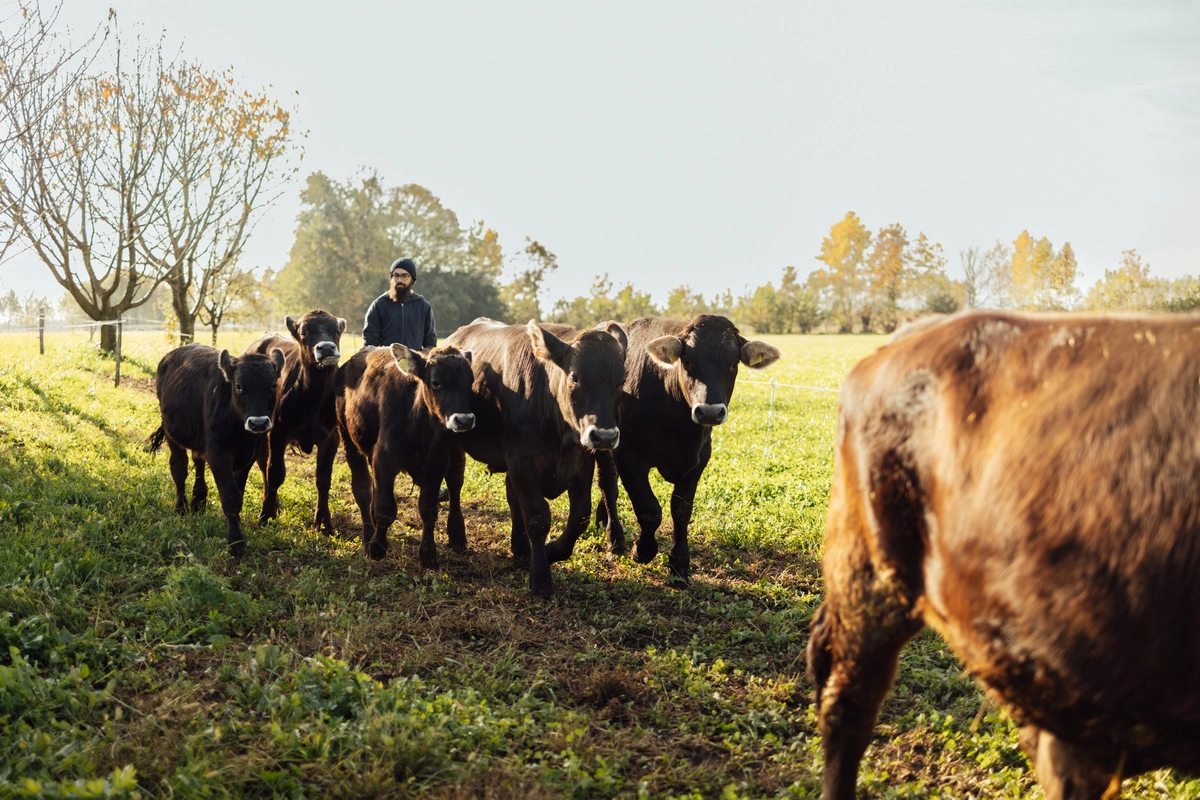
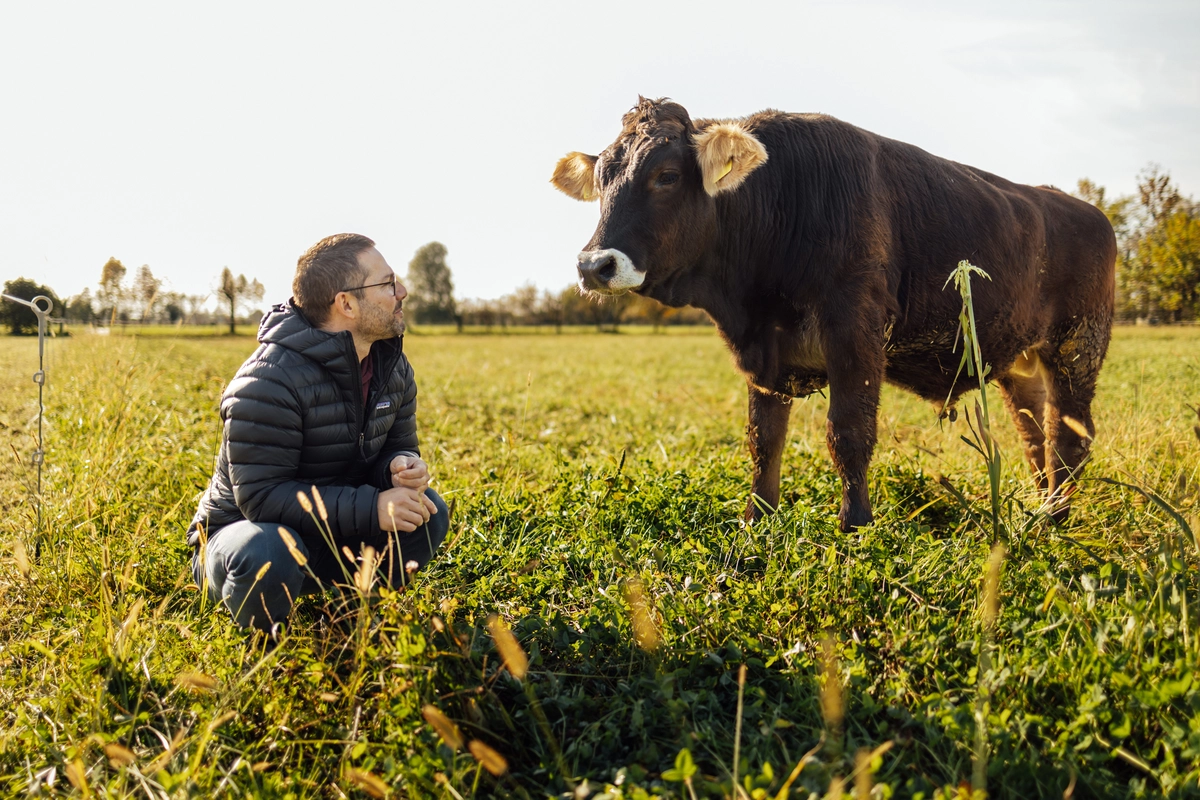
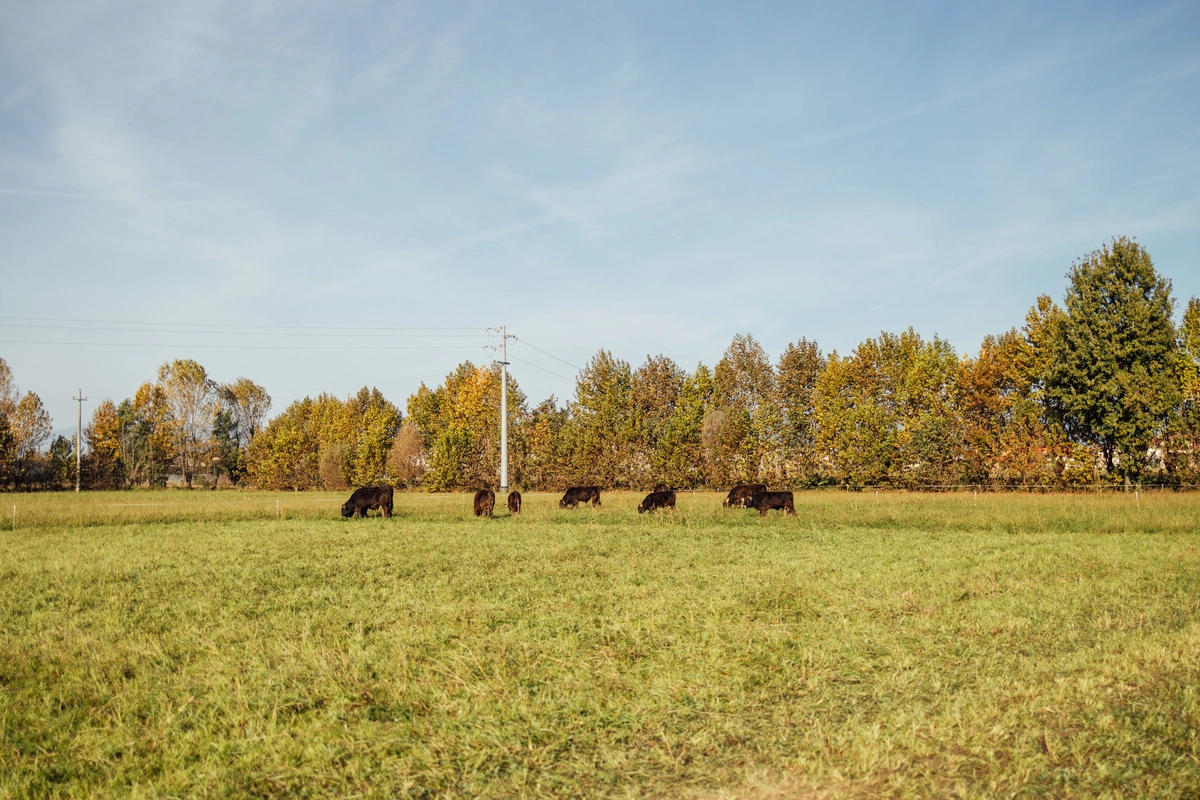
At the heart of the project is direct management of the land. Verderosa Farm converts former cropland into permanent pastures and woodlands, and plants and maintains hedgerows and tree rows. It also raises cattle under rotational grazing, kept outdoors at all times except in unfavourable weather conditions.
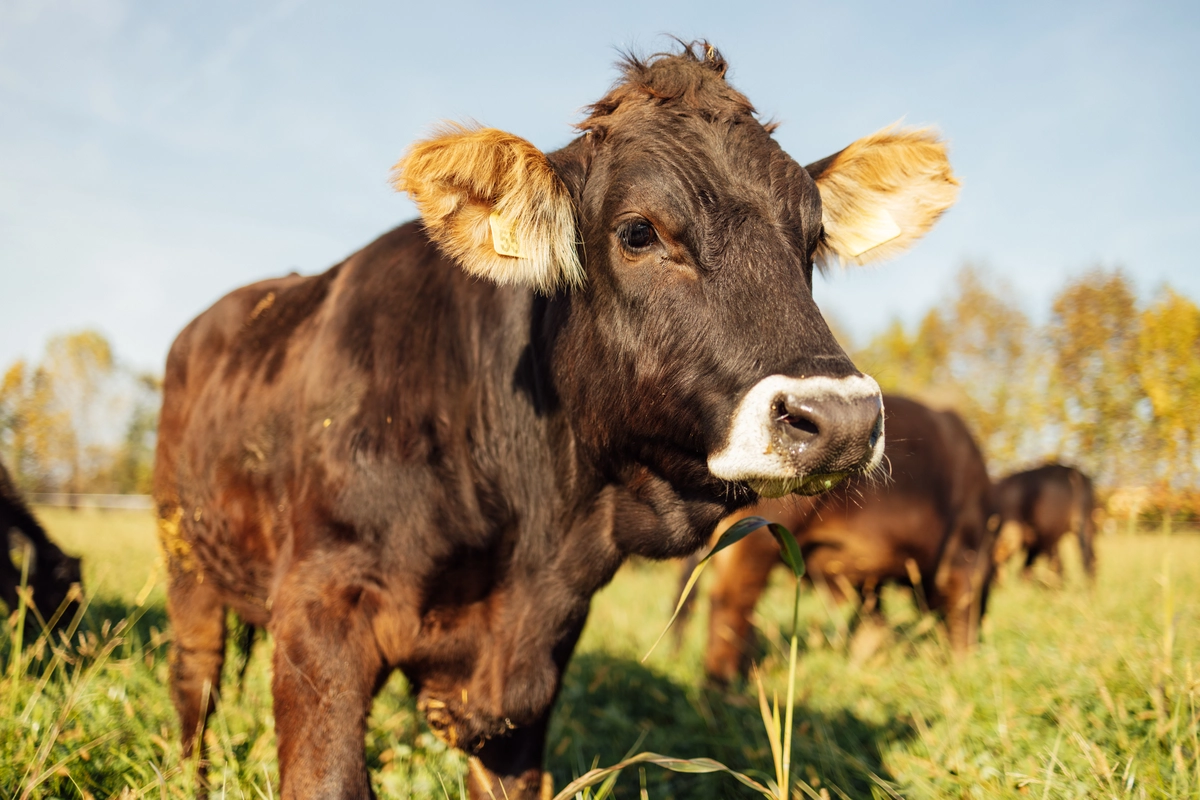
The farm has chosen to reintroduce the Rendena, a rustic native breed almost disappeared from the area. In 2025 the managed green areas reached 23.2 hectares, with around 2.7 km of hedgerows and tree rows and over 18,000 trees. They are spread across Bosco Limite, Il Guado, Bosco Fontaniva and Parco Fiume Brenta, and besides producing meat, wood and hay, they also host the forest kindergarten run by the Raìse association.
Our contribution
Beef is not the lowest-impact food, but it remains part of most people’s diet. That’s why it makes sense to work on reducing its impacts rather than ignoring them. Verderosa Farm allows us to demonstrate on the ground what it means to produce meat while generating more benefits than impacts.
In 2025, Verderosa Farm’s areas and activities removed 330 tCO2 against 64 tCO2 emitted. They also infiltrated 1 million m³ of water, against 23,465 m³ consumed.
Verderosa Farm has been a Benefit Company since 2023 and reports its impacts every year through a public Impact Report. It monitors indicators such as hectares of improved forest, kilometres of managed hedgerows and the percentage of native Rendena cattle.
Beef reaches end consumers through e-commerce and selected local restaurants. It demonstrates that a farming model built around the care of pastures and green areas can also be economically sustainable.